Many people see yoga as stretching or a fitness trend. That narrow view misses its real value.
Yoga is a system for living with more clarity, balance, and resilience. It trains the body, the breath, and the mind together.
This article explains how yoga becomes a positive way of life, not just a workout.

You will learn what yoga truly includes, how it shapes mindset and habits, and how to apply it in daily life without needing flexibility or extra time.
By the end, you will have simple, realistic steps to start living yoga every day.
What “a Positive Way of Life” Means in Yoga
Is yoga a workout or a life practice
Yoga includes physical postures, but that is only one part. On the mat, yoga builds strength, mobility, and awareness.
Off the mat, it trains attention, emotional balance, and values that guide daily choices.
A positive way of life in yoga does not mean constant happiness. It means clarity under pressure, steadiness during change, and the ability to respond thoughtfully instead of reacting automatically.
Yoga supports a healthier way of living by aligning actions with awareness.
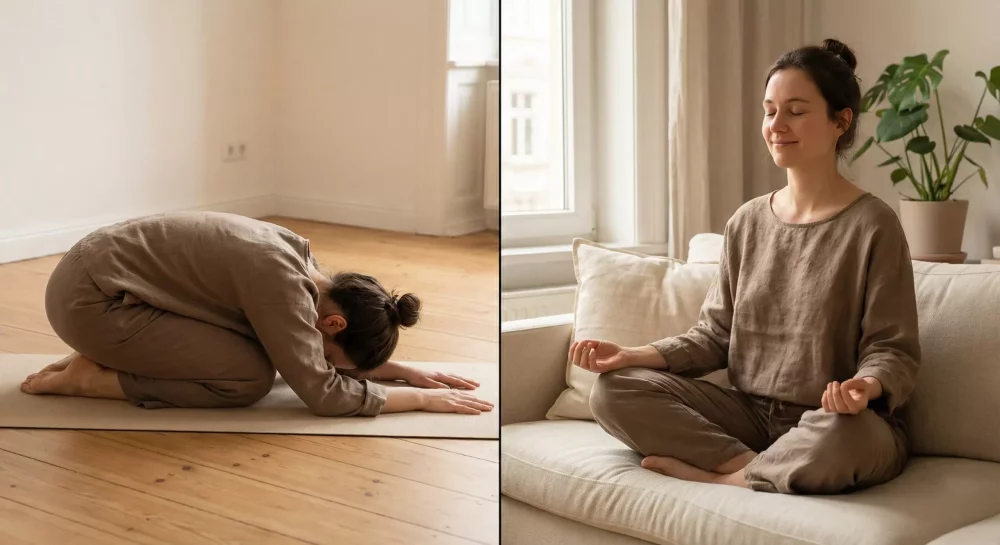
The core idea. Less reactivity, more awareness
The first change yoga brings is awareness. You notice your breath, posture, and thoughts before they control you.
For example, instead of reacting instantly to a stressful email, you pause, breathe, and choose a calmer response.
These small pauses reduce conflict, improve decisions, and lower stress. Over time, awareness reshapes habits and relationships in a natural way.
How Yoga Shapes a Positive Mindset
How breath and mindfulness change your thoughts
Breathing practices affect the nervous system directly. Slow, steady breathing signals safety to the body and quiets mental noise.
This is why yoga supports mental health and focus.
A simple practice:
-
Sit upright.
-
Inhale through the nose for four counts.
-
Exhale slowly for six counts.
-
Repeat for 60 seconds.
This short reset improves clarity and reduces stress anytime during the day.

Emotional regulation. Responding instead of reacting
Stress activates the fight or flight response. Yoga trains the opposite response through breath awareness and mindful movement.
In real life, this shows up as:
-
Staying calm during work conflict.
-
Listening instead of interrupting during family tension.
-
Letting emotions pass without suppressing them.
Yoga improves emotional regulation by creating space between feeling and action.
Self compassion and confidence without perfection
Yoga builds confidence through presence, not performance. There is no perfect pose. Progress matters more than comparison.
This mindset reduces self criticism and supports healthier self talk. Practicing with compassion creates resilience and sustainable motivation, not pressure.
How Yoga Improves Daily Habits and Lifestyle Choices
Building consistency through tiny routines
Consistency is easier when routines are small. Yoga fits into daily life through brief, repeatable practices.
A five minute starter routine:
-
One minute of breathing.
-
Two minutes of gentle movement.
-
Two minutes of stillness.
Habit stacking helps. Practice yoga after brushing teeth or before bed to anchor it into existing routines.

Better sleep, energy, and focus
Lifestyle benefits appear quickly with regular practice.
-
Evening gentle stretches calm the nervous system and improve sleep quality.
-
Morning mobility increases energy and posture.
-
Breath awareness sharpens focus during work.
Yoga improves quality of life by supporting natural rhythms of rest and activity.
Healthier boundaries and time management
Yoga philosophy includes ahimsa, which means non harm. Applied to modern life, it means avoiding burnout and respecting limits.
Yoga supports clearer boundaries such as:
-
Saying no to unnecessary commitments.
-
Scheduling rest without guilt.
-
Protecting personal time.
These choices reduce stress and support long term wellbeing.
Yoga Off the Mat. Practical Ways to Live Yoga Daily
Mindful breathing in real moments
Yoga continues beyond formal practice. Breath awareness works during commuting, meetings, or parenting challenges.
Use the three breath technique:
-
Inhale slowly.
-
Exhale fully.
-
Repeat three times.
This grounding practice resets attention and reduces overwhelm in minutes.
Living the yamas and niyamas in modern life
The yamas and niyamas are simple guidelines for mindful living.
-
Ahimsa. Choose kindness toward yourself and others.
-
Santosha. Practice contentment without losing ambition.
-
Satya. Be honest in thoughts, words, and actions.
These principles support ethical, balanced decisions in daily situations.
Mindful eating and body awareness
Yoga strengthens the mind body connection. You notice hunger, fullness, and energy signals more clearly.
This leads to:
-
Eating with awareness.
-
Respecting body needs.
-
Reducing emotional eating.
The approach is gentle and supportive, not restrictive.
The Main Benefits. What Actually Changes Over Time
Short term benefits. First 2 to 4 weeks
Early changes include:
-
Reduced stress.
-
Better sleep.
-
Improved mood.
Expect gradual improvement, not instant transformation.
Medium term benefits. 2 to 3 months
With consistency, benefits deepen:
-
Better posture and mobility.
-
Increased focus and resilience.
-
Stronger emotional balance.
Motivation grows as positive results accumulate.
Long term benefits. Identity and life direction
Long term practice reshapes identity. Decisions align with values. Life feels more intentional and balanced.
Relationships improve as communication becomes calmer and more compassionate. Yoga becomes a foundation for mindful living.
Common Misconceptions That Stop People from Starting
“I’m not flexible”
Flexibility is not required. Yoga adapts to every body through modifications, props, and beginner classes. Flexibility develops over time.
“I don’t have time”
Yoga works in micro sessions. Three, five, or ten minutes is effective when done consistently. The minimum effective dose builds momentum.
“Yoga is spiritual and not for me”
Yoga can be spiritual or secular. Many people practice yoga as attention training and stress management. There is no pressure to adopt beliefs.
How to Start. A Simple Plan for Beginners
Choosing the right style for your goal
Different styles support different needs:
-
Hatha. Gentle and foundational.
-
Vinyasa. Strength and movement.
-
Yin. Deep relaxation and flexibility.
-
Restorative. Stress relief and recovery.
Choose based on your current goal.
Weekly beginner routine. 2 to 4 sessions
A realistic schedule:
-
Two short weekday sessions.
-
One longer weekend session.
-
One optional restorative session.
Include rest days to support recovery.
What to track so you stay motivated
Track progress beyond flexibility:
-
Mood and energy.
-
Sleep quality.
-
Focus and patience.
Simple journal prompts help notice change and maintain consistency.
FAQ. Quick Answers to Common Questions
How often should I do yoga for lifestyle change
Consistency matters more than intensity. Three short sessions per week is enough to create change.
Can yoga replace therapy or medication
Yoga supports mental health but does not replace professional care. Seek qualified help when needed.
What if I feel worse after yoga
Mild discomfort is normal early on. Sharp pain or dizziness is not. Adjust pace, hydrate, and modify poses as needed.
Is meditation required
Meditation is optional. Start with breath awareness and stillness for a few minutes.
Conclusion. Your Next Small Step
Yoga is a positive way of life because it builds skills, habits, and values that support clarity and balance. It trains awareness, emotional resilience, and intentional living.
Your next step is simple. Practice five minutes daily for seven days. Choose a beginner routine or class style that fits your life and begin today.
Small actions, repeated consistently, create lasting change.