
For a first yoga class, decide how much help you want while you move. A prerecorded video gives you a pause button. A live online class can give you a chance to ask questions from home. An in-person class lets you see the teacher without using a screen and may make it easier for the teacher to notice when you need another explanation. The amount of individual feedback still depends on how the class is taught.
If you already know you want someone to answer questions, look for a beginner class that explains when questions are welcome. If your main barrier is finding an uninterrupted time, start by previewing a short recording that you can pause and replay.
Compare three ways to take your first class
| Format | What you can control | What to check before choosing |
|---|---|---|
| Prerecorded video | Start time, volume, playback and when you pause | Whether the teacher describes transitions aloud and shows an option you can follow |
| Live online class | Your practice space and, depending on the class, whether you use a camera | Whether the teacher can see participants, answers questions and explains camera expectations |
| In-person class | Which class you book and where you set up, subject to studio arrangements | Class size, beginner instruction, room setup and how the teacher offers feedback |
A live class can be an interactive lesson or a broadcast with no discussion. A studio class may be a small introductory group or a busy session where everyone follows a demonstration. Ask what happens in the specific class you are considering.
When a prerecorded class makes sense
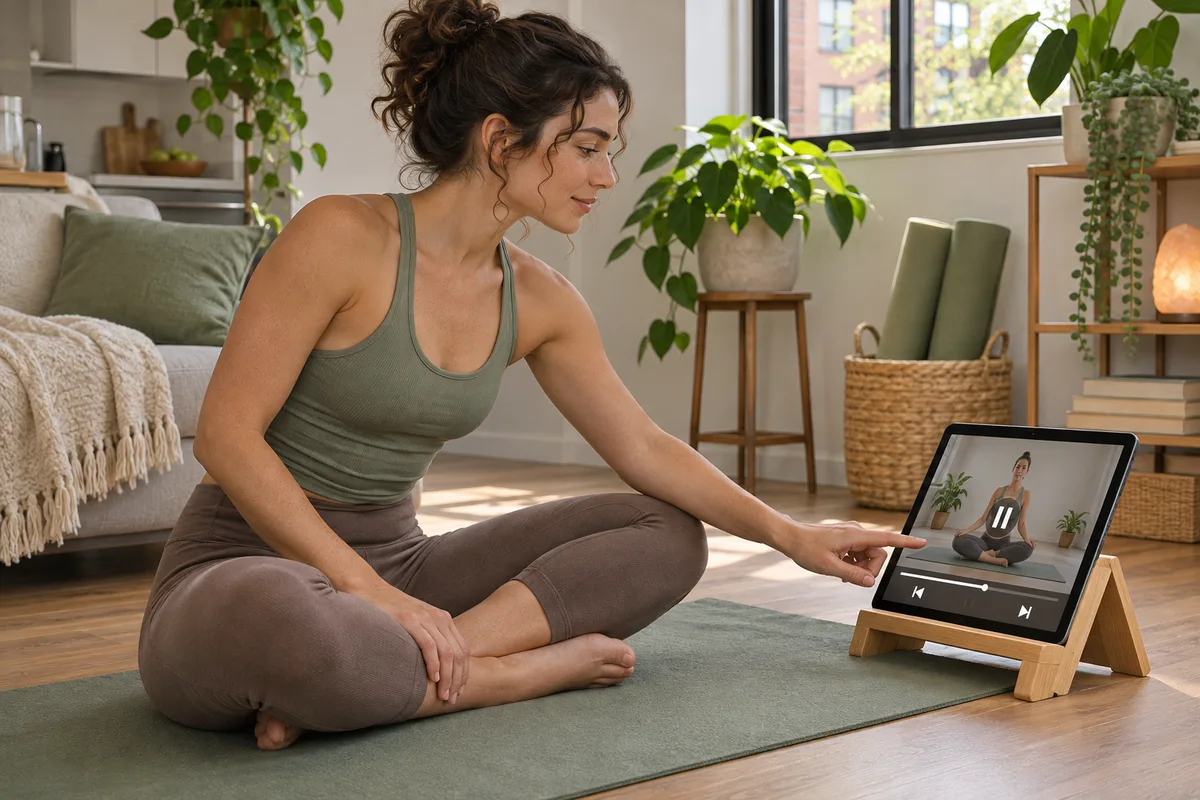
A recording is a practical choice when your free time moves around. You can preview the lesson during lunch and play it after work. If the first transition is confusing, pause and replay it before deciding whether to continue. You can also repeat the same recording the next time so you have one less thing to learn.
Preview three points: the first movement, a transition in the middle and the way the teacher ends the class. At each point, check whether you can tell where to start, what moves and how to finish. If the only cue is the name of a pose you do not know, choose a different lesson or skip that part. Our guide to choosing a beginner yoga video walks through the preview in more detail.
Pause between movements if you need to look closely. If you regularly lose track of instructions while facing away from the screen, choose a teacher who explains the steps aloud. A bigger screen may help you see a demonstration, while clear verbal cues can help even when the screen is out of sight.
When a live online class makes sense
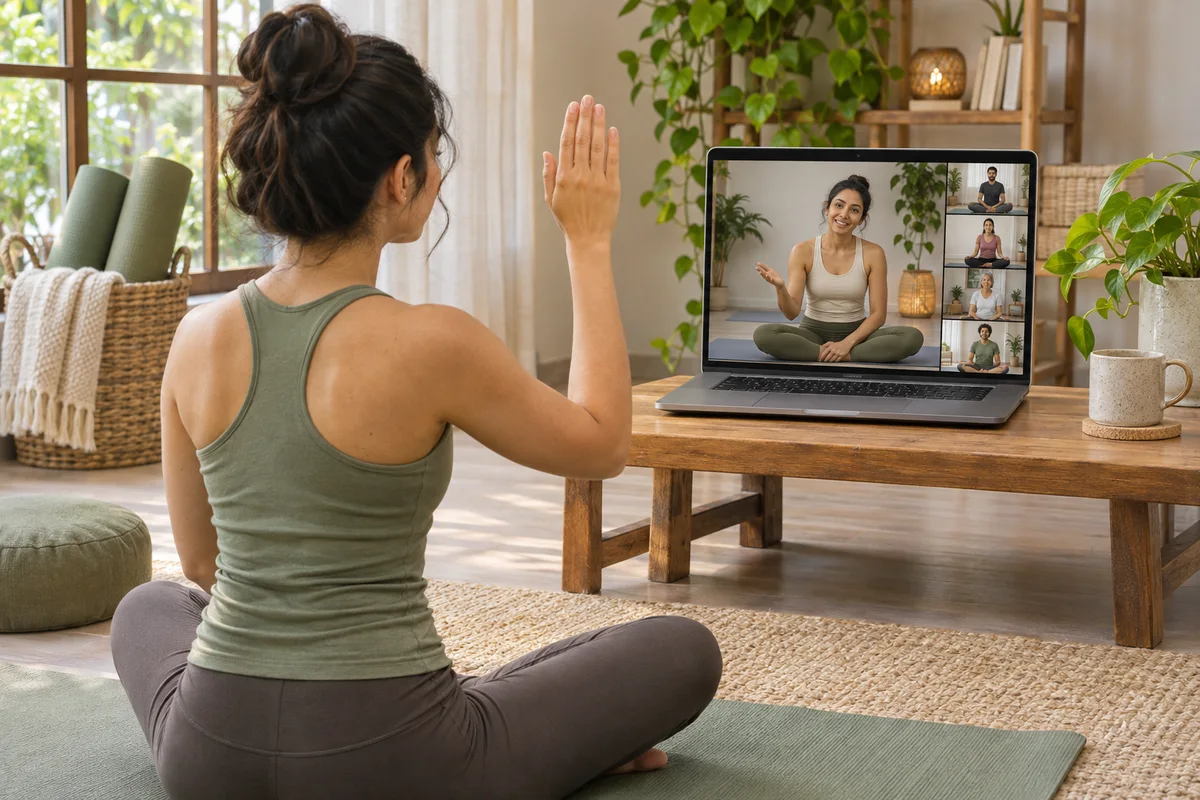
Live online is worth considering if you want to stay home and have a specific question for a teacher. Check whether the class accepts questions during practice, at the end or through a follow-up message. If the teacher can see participants, ask whether video is optional and whether the class is recorded. Some beginners are comfortable with group feedback and others prefer asking a question privately.
If you plan to turn on your camera, test the view before class. Check whether the teacher can see the space where you will move, and move private items out of the background. Set the device somewhere stable and confirm that you can hear the instructor from the mat. If the setup takes longer than the class, a recording or a local studio may fit your first week better.
Questions to ask a live online teacher
- Is this class taught for people who have never taken yoga?
- Will you be able to see me, and is the camera optional?
- When can I ask about a movement I do not understand?
- Do you demonstrate alternatives if I need to skip a transition?
When an in-person class makes sense
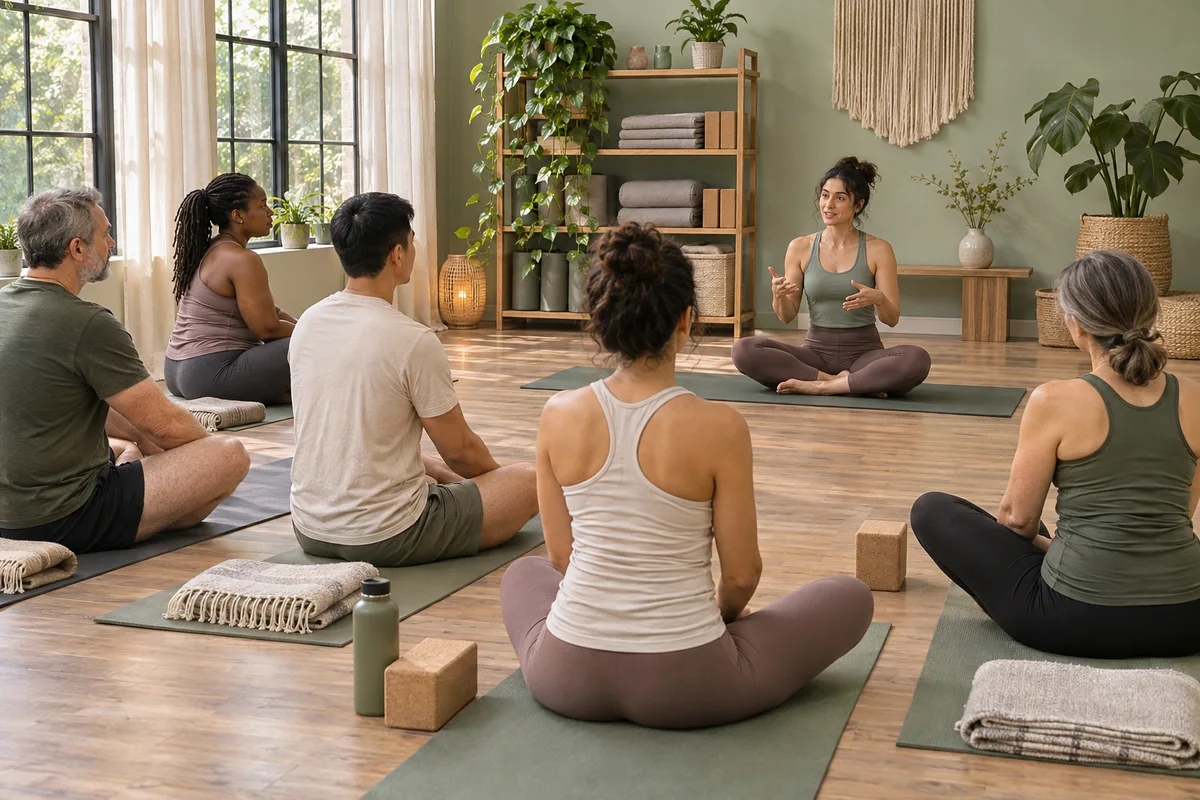
Look for an introductory class if you prefer to see demonstrations in the room, ask a question before class or get help choosing an option. Before booking, ask whether the class expects any prior experience. “All levels” can cover several teaching styles, so a useful follow-up is whether the teacher talks through common transitions and shows options during the class.
Include the real time it takes to attend. A class that fits your calendar on paper may be hard to repeat once you add the drive, parking, check-in and time to get home. On the other hand, a studio near work might fit more easily than a home session in a busy household. Compare one actual class time with one realistic time you could practice at home.
When you arrive, tell the instructor it is your first class and ask where you can see and hear clearly. If you prefer verbal guidance or want to be asked before any hands-on adjustments, say so before class. You can also ask where to get a block or chair if the class uses one.
Choose based on what happened in a trial session
After one class, write down what helped and what got in the way. You may discover that the format works and the teacher's pace is the problem. You may also discover that a class you enjoyed is difficult to fit into your week. Write one change you can test next time so you can tell whether it helps.
If your work schedule shifts every day
Preview a recording and choose a day when you can make room for it. Keep the lesson ready so you do not spend the whole practice window searching. If the recording leaves you with a question you cannot resolve, note the part that confused you and bring it to a live beginner class. A timestamp or a description of what the teacher asked you to do will make the question easier to answer.
If you are unsure when to move
Choose an interactive class and tell the instructor which kind of cue you find hard to follow. For example, “I can see the starting position, but I miss the cue for how to come out of it.” That gives the teacher something specific to explain. Afterward, you can decide whether to try a recording with similar instruction or return to the same class.
If privacy or shared space is your main concern
Think through where you can practice and who can see or hear you. A recording can be easier if you need to stop when someone enters the room. A studio may work if home is too crowded. For a live class, ask about camera and recording policies before booking, then decide how much of your space you are comfortable sharing.
Compare the full cost before you commit
Check the price of a single class or trial and what it includes. For a studio, ask whether the mat or any props are included and whether the class has a cancellation window. For an online class, see whether the trial renews and whether the introductory lesson is part of the plan you are considering. Include travel and setup time when you compare choices. One trial can answer questions about pace and feedback before you commit to multiple sessions.
Decide what to repeat next week
Keep the format if you understood enough to participate, could pause when you needed to and can name a realistic time to return. Change the teaching pace if you kept missing cues. Try a format with live questions if you understood the demonstration but still had doubts about what the teacher meant. If you want help turning that first class into a repeatable plan, use the seven-day beginner yoga checklist.
Questions and answers
Do I need to go to a studio to learn yoga?
You can start at home with a beginner lesson you can follow. A studio can be helpful if you want to see the demonstration from different angles or ask a question in person. Find out how each class handles questions and options before deciding.
Can a teacher correct my form in a live online class?
Some teachers can give verbal feedback if they can see you and the class is set up for interaction. Camera angle, connection and group size affect what they can observe. Ask whether feedback is part of that particular class.
Can I use both online and in-person classes?
Yes. You might take an introductory studio class to learn the teacher's cues, then repeat a short recorded lesson at home. You can also start with a recording and bring a specific question to your first interactive lesson.
What should I do if the first class moves too quickly?
Pause a recording or stop following the sequence until you understand the next instruction. In a live setting, ask when you can get clarification. For the next session, look for a beginner class that explains transitions at a pace you can follow.
Is a camera required for live online yoga?
That depends on the instructor and platform. Ask before booking if you prefer to keep it off or if you want feedback. Check whether the session is recorded and whether participants appear in the recording.