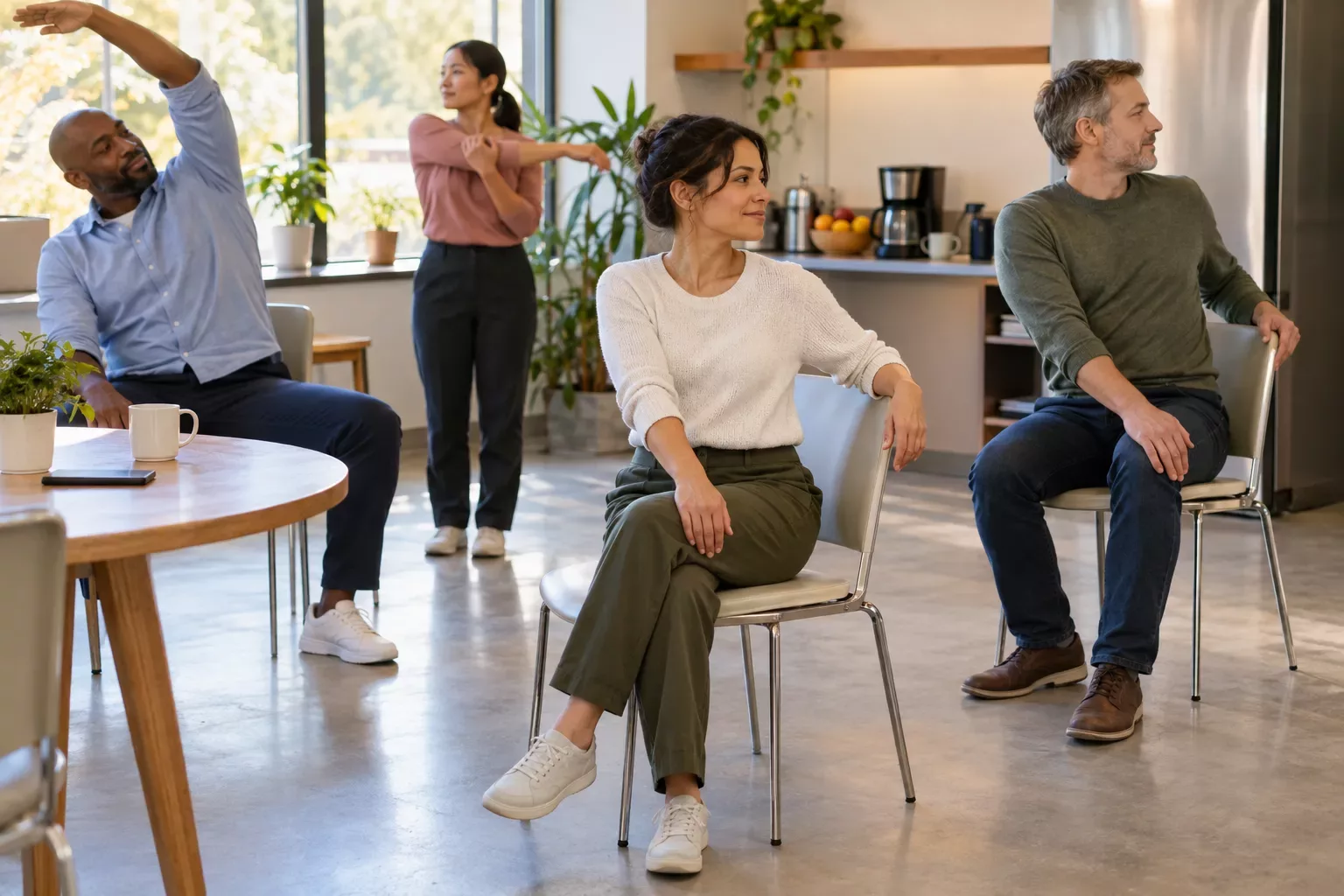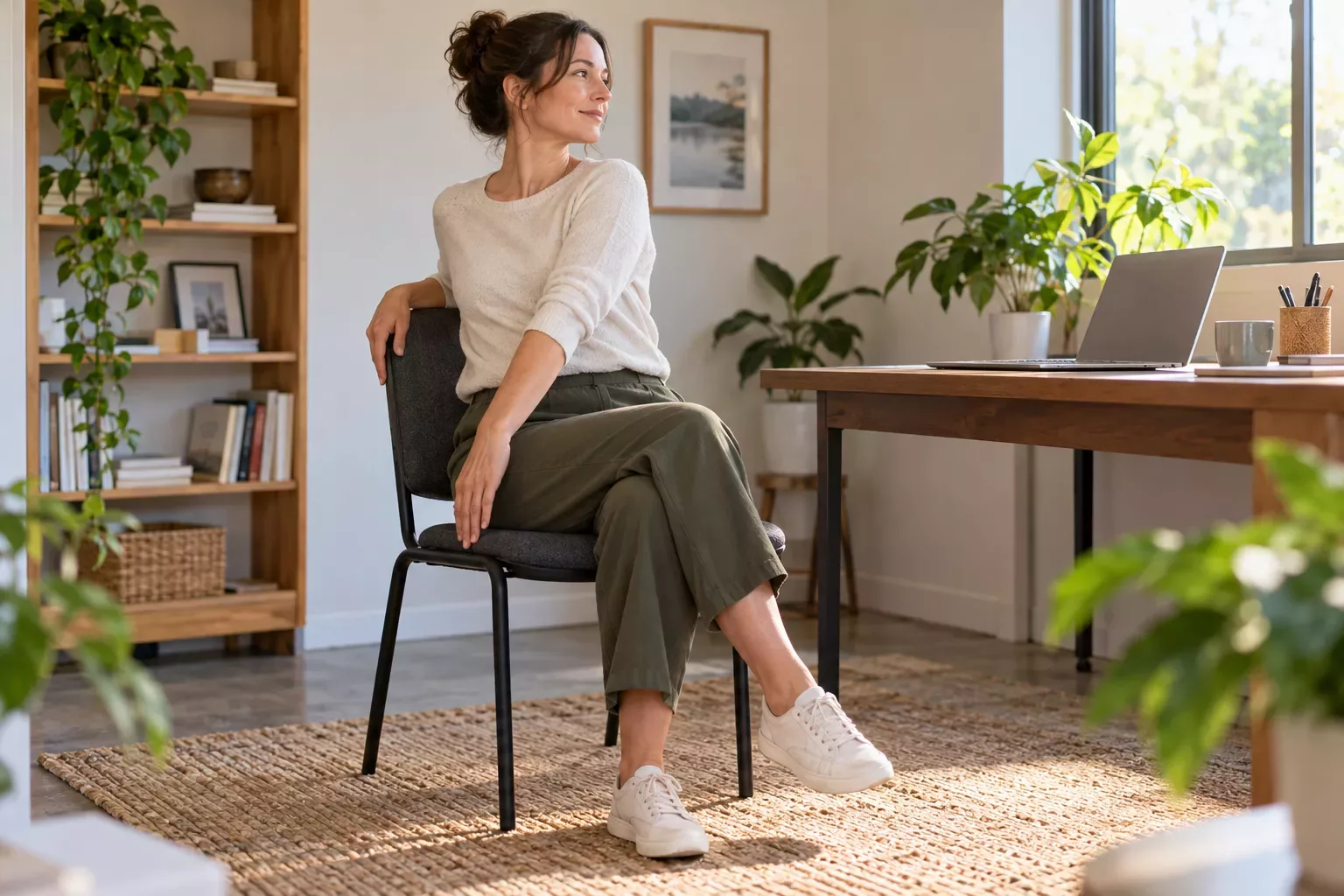
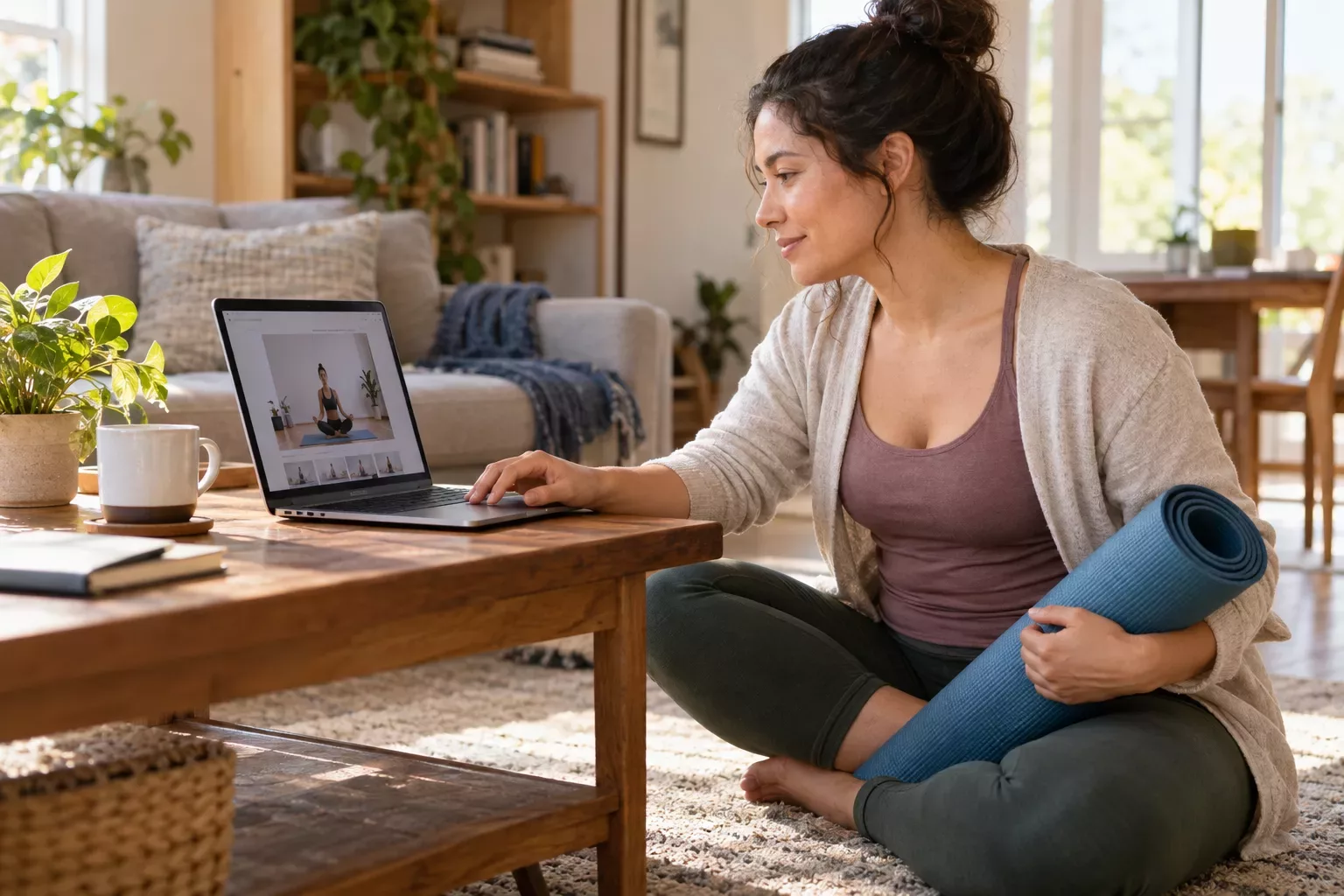
Starting yoga at home is easier when the first decision is small: choose one beginner practice, make room to move, and give yourself permission to pause. You do not need a decorated yoga room, a complete set of props, or the ability to touch your toes.
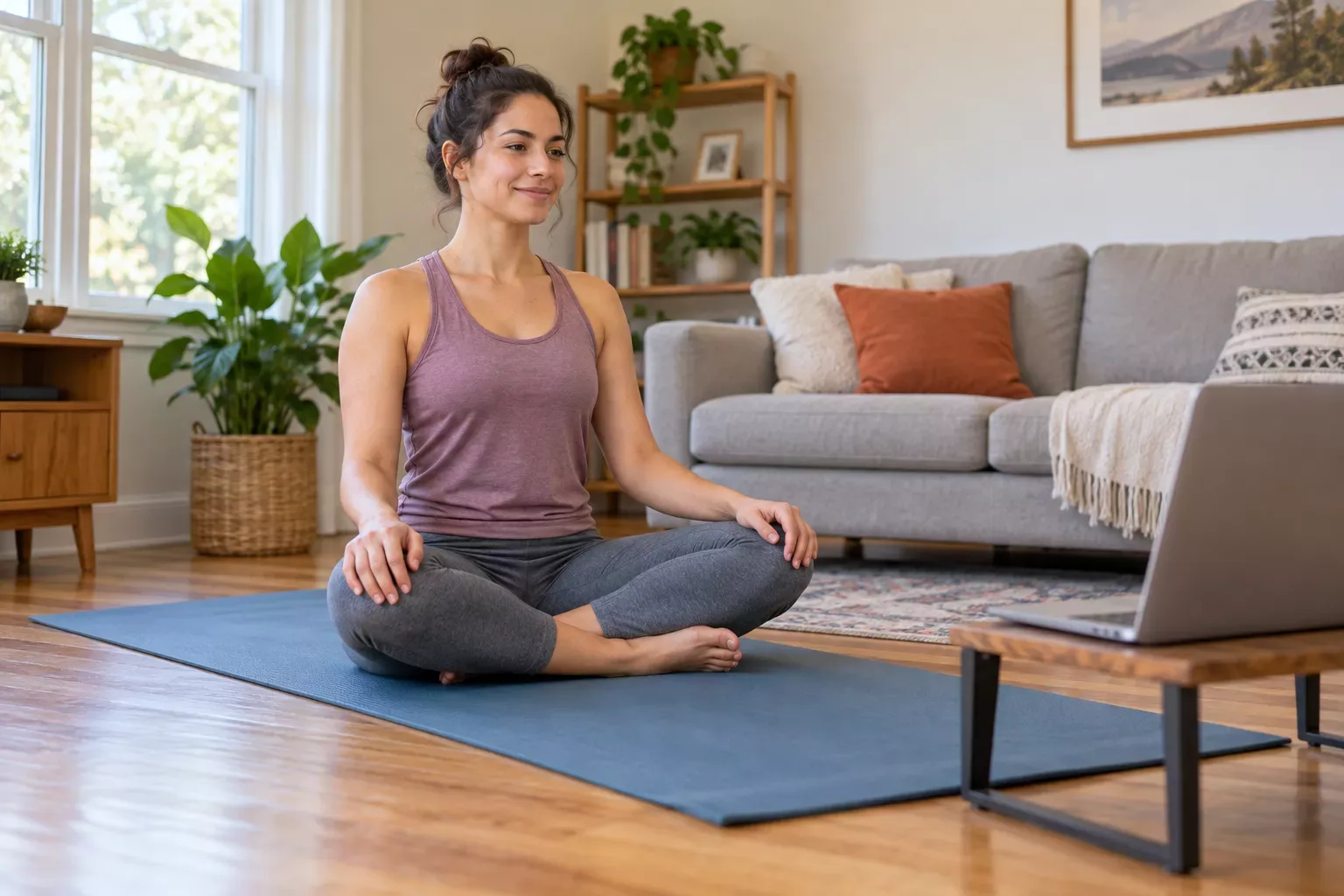
This guide helps you organize your first few sessions. For help with a particular movement, a qualified instructor can give feedback that a written article cannot.
Choose a first session you can actually follow
Look for a class explicitly labeled for complete beginners. Preview a few minutes before committing. The teacher should explain where to place your body, give you time to change positions, and offer alternatives. A short class with clear instruction is a better starting point than an impressive flow you have to chase.
Check the whole class description. “All levels” might include modifications, but it does not necessarily mean the teacher explains every transition. Also check whether the session includes kneeling, floor work, or weight on the hands. Those details matter more than a soothing thumbnail.
Make the space workable
Move cords, small furniture, and anything that could roll under your feet. Check that you can lift your arms without touching a shelf or ceiling fan. Test the screen position before starting so you will not need to twist around to watch it.
Choose a stable, nonslip surface. If the available floor feels unstable or slippery, change the location or choose a practice that suits the space. A bed is not a general replacement for a stable exercise surface.
Treat the first week as a learning week
Try this flexible starting structure:
- First session: learn how the teacher gives instructions. Pause freely.
- Second session: repeat the same class rather than collecting new videos.
- Third session: decide whether the pace, duration, and positions suit you.
These are planning suggestions, not a required exercise prescription. Rest or choose a different activity when that is the better option for you.
Repeating a session gives you useful information. Was the room too warm? Could you hear the cues? Was getting up and down the main difficulty? Change one practical thing before your next attempt.
Know what to skip
You do not have to complete a pose because it appears in the video. Stop a movement that hurts, makes you feel faint, or feels beyond your control. Resting while the teacher continues is an available choice.
Avoid treating beginner yoga as a test of extreme flexibility. NCCIH advises new practitioners to avoid advanced practices such as headstands and forceful breathing, and recommends learning with qualified guidance. NCCIH yoga guidance
Give yourself a useful definition of success
For the first session, success could mean choosing an appropriate class, learning two familiar instructions, and noticing which setup needs changing. A perfect pose or an uninterrupted streak is not necessary.
Before you close the video, decide what you will repeat next time. A specific next step—“the same beginner class after breakfast on Saturday”—is easier to act on than “do more yoga.” Start with a practice you can return to, then build from experience.
Build your first practice around three decisions
Decide how you will receive instruction
A recording is convenient when you want to repeat an explanation. A live class gives you a chance to ask questions, although a group teacher may not see every movement. An individual lesson offers a more direct opportunity to discuss what you need. These formats can complement one another; you do not have to commit to only one before trying yoga.
For your first attempt, choose the format that resolves your biggest uncertainty. If you mainly need help organizing the room, a clear introductory video may answer that question. If you cannot work out how to enter a position comfortably, another recording might leave the same question unanswered. Write down the exact problem and ask a qualified instructor about it.
Decide what you can leave out
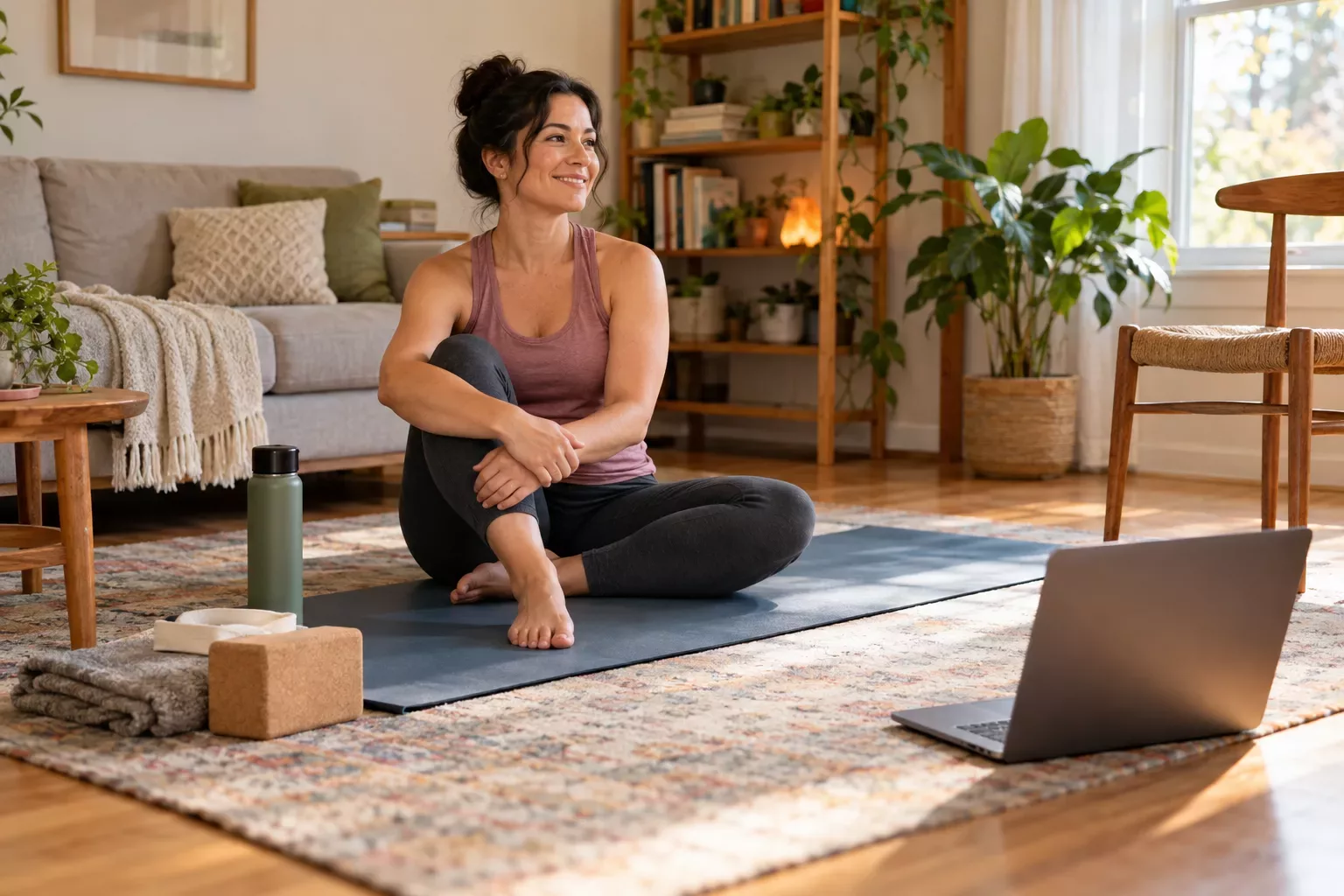
Create a simple list before searching: no floor work, no kneeling, no hand weight-bearing, or no overhead movement, if any of those apply to your situation. Do not combine restrictions you do not need merely to find the easiest-looking class. The purpose is accurate selection, not a score of how limited you are.
Use the list to read descriptions and ask questions. A useful message to a teacher is, “I am new, have about twenty minutes including setup, and need a class that stays seated. Does this lesson fit?” That is easier to answer than asking whether yoga is generally suitable for you.
Decide how you will return
Choose a second opportunity before the first session ends. Keep it tentative enough to respect how you respond, but specific enough that you will recognize it. You might repeat the introductory class after breakfast on a weekend, rather than begin a daily challenge immediately.
The second session is a chance to use what you learned about the first. It does not need new poses. Familiarity with the teacher's cues can be a worthwhile change even when the video remains identical.
Use a first-session card and a brief troubleshooting check
Keep one card beside your saved beginner lesson. Record its starting format, the part you intend to learn, a familiar resting option, and when you need to finish. The video runtime is not the whole appointment: leave room to clear the floor, position the screen, pause for explanation, and put things away.
For a ten-minute opportunity, use the opening to check the setup, the middle to follow a suitable instructor-led section, and the finish to stop comfortably and note one question. This is a planning example, not a pose sequence. Do not fill spare minutes with movements you have not learned.
If the attempt becomes confusing, check the cause before repeating it. Was the class too fast, the device behind you, or the movement unsuitable? Pause rather than chasing the teacher's shape or finishing because the recording continues. Fix one practical obstacle, or seek guidance when the question concerns your individual needs.
Choose the next learning step
After the first attempt, keep the class link and one useful observation. Decide whether to repeat a suitable lesson, change the practical obstacle, or ask for clarification. A first session does not need to become a daily challenge.
For a detailed day-by-day learning schedule, use the seven-day beginner plan linked below. Here, the job is simpler: know what you will try next and why. Keep the next opportunity tentative enough to respect how the first attempt went.
What to postpone until you have experience
Do not build an equipment collection around every object you see in videos. First establish what the class requires and what you can use appropriately. Similarly, leave advanced pose goals, long streaks, and complicated breathing exercises outside the first-week brief.
If your goal involves a medical condition, avoid turning a general beginner guide into an individualized plan. You can still organize your questions, describe your available space, and identify the instruction format you would prefer. The answer about movement suitability needs to come from someone who can assess the relevant needs.
Keep the next step small enough to test
At the end of the week, choose one practical improvement: a more suitable class, a different practice time, clearer instruction, or a better room arrangement. Changing one variable makes it easier to understand the result. A complete lifestyle redesign is much harder to evaluate.
Make the first month a learning project
Keep a question list separate from the practice
When you meet an instruction you do not understand, write it down after stopping comfortably. You might ask how to enter a seated position, what the teacher means by a cue, or whether a class includes a particular transition. Keep the question concrete enough that someone can answer it. You do not need to search for a new explanation while holding the position that confused you.
On a separate day, use the list to choose an introductory lesson or ask an instructor. That separates learning a concept from attempting a movement. It also prevents a single confusing moment from becoming a judgment that the whole practice is unsuitable. Sometimes the next useful session is a conversation or a demonstration rather than a longer workout.
Review what became easier to organize
At the end of the month, consider what you now know about your space, preferred instruction, and available time. Perhaps you have identified a class that fits your room, learned where to place the screen, and found a reliable weekly window. Those are practical results even if your goals about strength or flexibility need a longer and more individual discussion.
Keep the parts that reduced confusion. Remove extra tracking or preparation that did not help. The next month can begin from a clearer starting point, rather than from a larger list of rules. You can still change teachers, formats, or goals as your experience develops. A first home practice is a starting arrangement to learn from, not a permanent contract about how you must practice.
Continue learning
- How Much Space Do You Need for Yoga at Home? A Small-Room Checklist
- How to Choose a Beginner Yoga Video You Can Actually Follow
- A Flexible 7-Day Yoga Plan for Beginners at Home
Questions and answers
Do I need to buy anything before my first home class?
Check the chosen class before buying equipment. You need an appropriate surface, enough space, and any support genuinely required for the lesson, but not every item in the teacher's room. If you cannot provide the required setup, select a class with different requirements or get advice. Avoid improvising weight-bearing supports from unstable household objects simply to keep the shopping list short.
Should I choose the shortest beginner video available?
Duration is only one filter. A short video can move quickly and leave little explanation between positions. Preview the instructions and transitions, then count setup and finishing time as well. A longer introductory lesson with opportunities to pause may be easier to learn from than a rushed five-minute flow. Choose what fits your attention and requirements, not just the smallest number on the thumbnail.
What if I stop halfway through?
Work out why you stopped. Running out of time calls for a different window; unclear instruction calls for explanation; discomfort may call for another movement or professional guidance. You do not have to finish the second half immediately or make the next session longer. Use the information to choose an appropriate next attempt instead of treating completion as the only useful result.
Can my first session be entirely seated?
Yes, you can look for a class designed to remain seated. Confirm that the whole session, including the beginning and finish, matches that description. A chair-yoga title sometimes means standing movements using a chair as support. You also need a suitable stable seat and any individualized guidance relevant to your needs. Seated describes the format; it does not establish that every movement in it is suitable for everyone.
How should I prepare a question for my first instructor?
Describe the point where you become uncertain and what you are trying to learn. For example, say that you understand the starting position but not the route down to the floor. Include relevant class details and any individual requirements you already know. Ask what information the instructor needs before suggesting an option. A precise question gives them something to explain; it does not require you to diagnose the problem or demonstrate it repeatedly while waiting for an answer.
How can I decide whether to repeat the first class?
Review whether its basic positions and transitions were appropriate, its cues were understandable, and its timing fit your available window. If the class was a reasonable match with one practical obstacle, such as device placement, fix that obstacle and consider repeating it. If the core sequence did not fit, select another lesson or seek feedback. Repetition is useful when it gives you a clearer learning opportunity, rather than simply another attempt to finish an unsuitable recording.