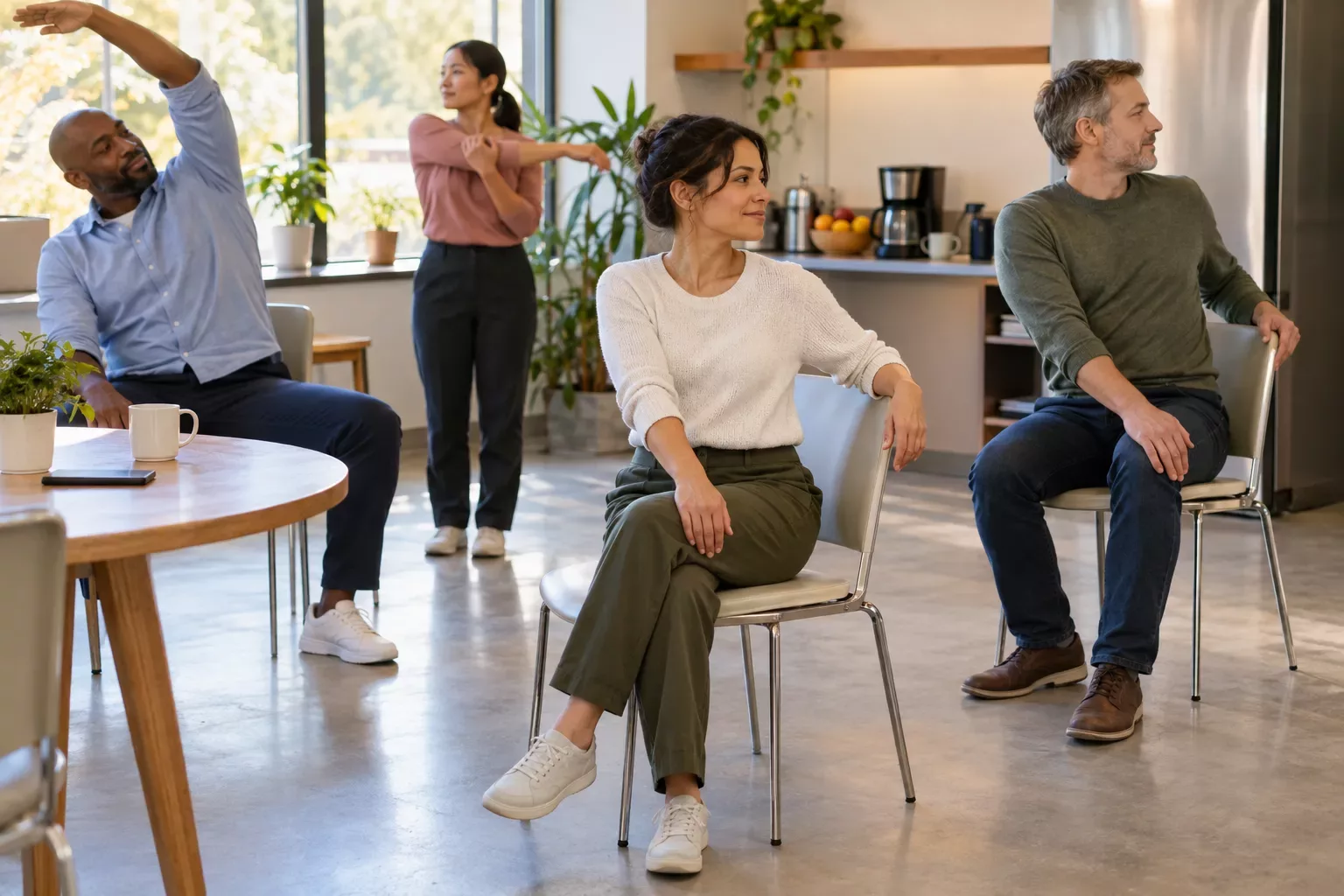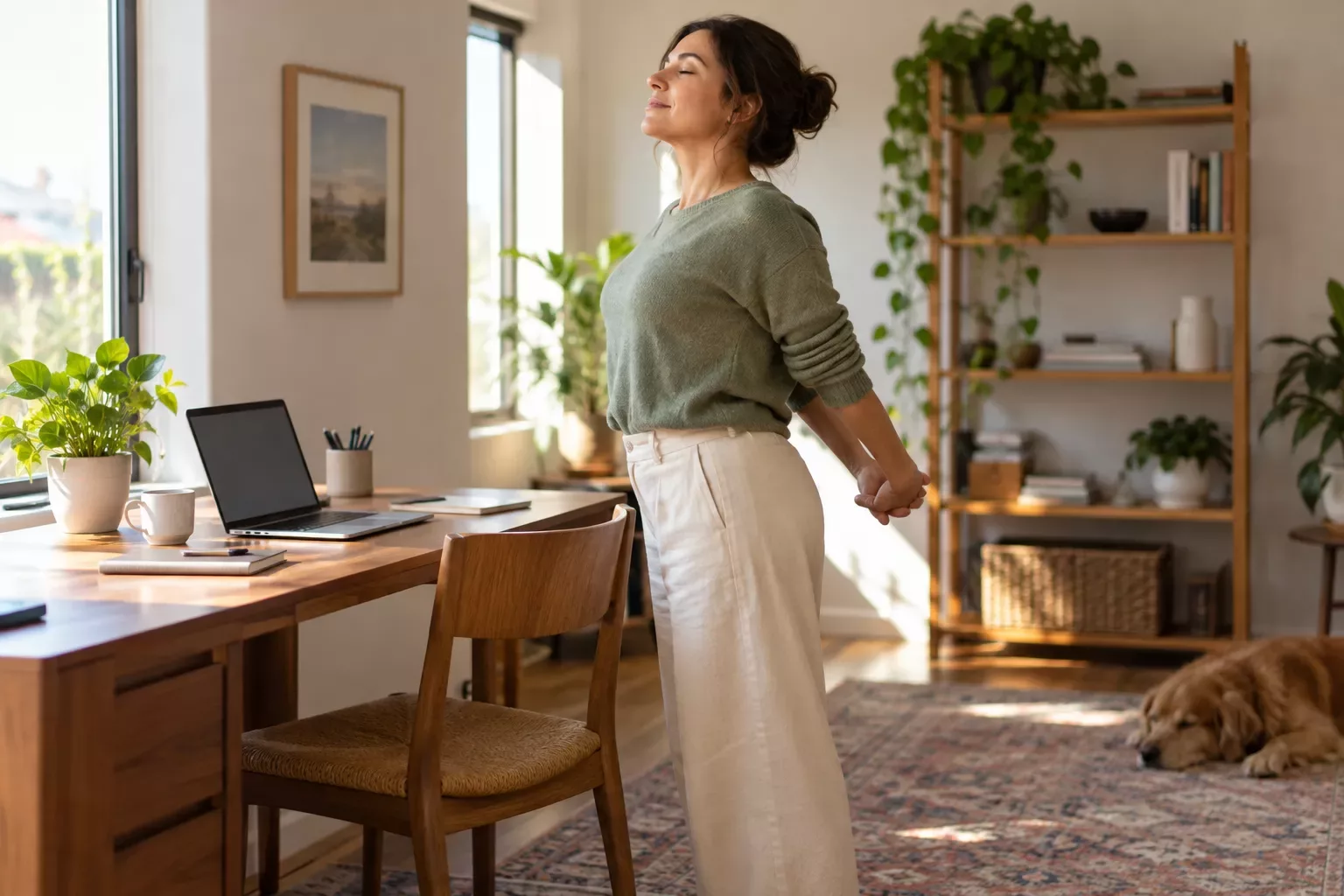
There is no single room size that fits every yoga class. Start with your actual mat footprint, then check the space needed for the lesson's arm reaches, steps, and transitions. A mat fitting between furniture does not establish that the whole practice fits there.
A small room can work for home yoga if the movements fit the room. The useful question is not whether the space looks like a studio. It is whether you can move, see your instructions, and change position without hitting furniture or stepping onto an unstable surface.
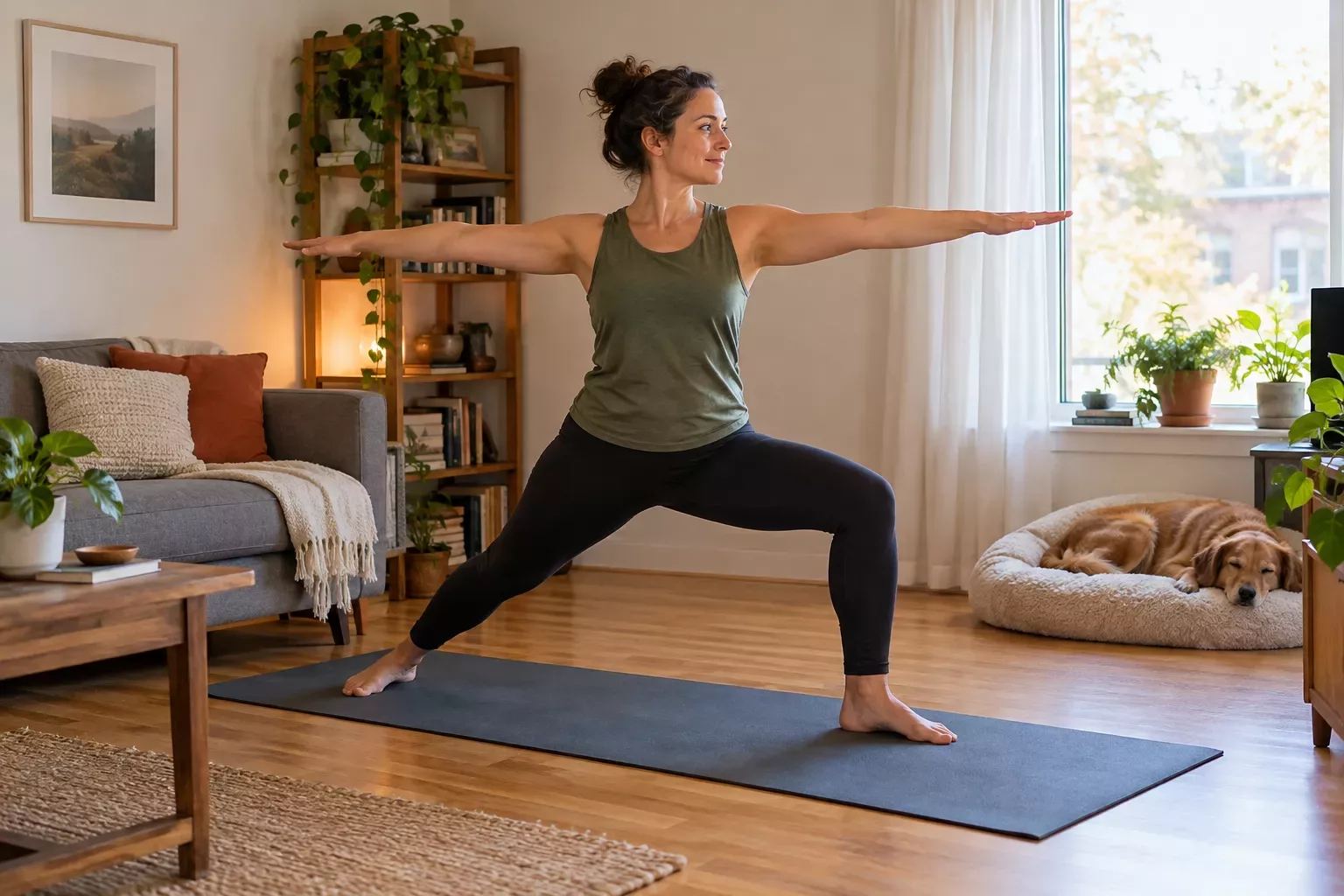
Start by choosing the kind of practice you want to do. A seated class, a standing session, and a wide-ranging floor flow need different amounts of clearance.
Measure the movement footprint, not just the mat
Measure your actual mat or identify the stable floor area where the lesson starts. Record feet and inches if useful, but do not treat a standard mat size as a universal minimum room size. Your body, the selected movements, and the route between positions determine what clearance you need.
Preview the whole class and fill in a quick room worksheet. Check ordinary positions slowly; do not attempt an unfamiliar balance or deep position just to measure the space.
| Space check | Record what could interfere | A practical response |
|---|---|---|
| Starting footprint | Mat or chair edges and nearby furniture | Include the chair's legs and the mat's full area |
| Overhead clearance | Ceiling fan, low light, shelf | Choose an appropriate class or another location |
| Side-to-side reach | Wall, bed frame, neighboring furniture | Clear the area or select a fitting format |
| Forward and backward steps | Cord, rug edge, doorway | Keep the movement route clear |
| Floor-to-standing route | Obstruction between starting and ending positions | Preview the entire transition |
| Screen and exit | Device in the route or a blocked shared walkway | Move the device and retain usable access |
A room can fit each stationary position while failing to fit the changes between them. If the lesson repeatedly sends you beyond the cleared area, change the class or location. Do not solve every collision by hurriedly shrinking or rotating unfamiliar movements.
Choose a location you can reset quickly
Consider the space beside the bed, a cleared corner of the living room, or a temporary area after moving one lightweight chair. Avoid arrangements that require shifting heavy furniture every time. A complicated setup can turn a ten-minute practice into a household project.
Keep the exit clear. Do not block a doorway, heater, or shared walkway. Ask other people in the home to avoid crossing the practice space while you are moving.
Match the class to the room
For a narrow room, preview classes with fewer wide stances and fewer changes of direction. Check whether the teacher demonstrates options with arms lower or a narrower position. If the class depends on space you do not have, select another one rather than repeatedly improvising around furniture.
For a shared room, a short session with headphones might be more practical than a long class with music. Make sure you can still hear important sounds around you.
Position the screen before beginning
Place the device somewhere stable and outside the movement area. Test the view from the positions you expect to use. A phone balanced on a stack of objects can fall, and a screen behind you encourages repeated turning.
For an unfamiliar class, watch the difficult transition first. Then pause the screen and learn it with appropriate instruction. A small room is not a reason to hurry through movements you cannot see.
Keep storage simple
Store your mat where it is easy to reach and can dry as its care instructions require. A clear shelf or an existing corner may be enough. Do not store a damp mat tightly rolled just to make the room look tidy.
Try a sixty-second reset after each session: move the device back, restore the walkway, and put away what you used. The aim is a room that supports both your life and your practice.
Your space is ready when the chosen class fits it safely. If only a seated practice fits today, that is a useful choice—not a failed version of a larger-room routine.
Turn a shared room into a temporary practice area
Identify what can move easily
Begin with lightweight items you can put back without strain: a small side table, a basket, or a loose footstool. Avoid making regular practice depend on moving a heavy couch. If heavy furniture divides the room, choose a class that fits the available section rather than treating furniture-moving as the warm-up.
Keep a simple description of the arrangement. For example, “move the side table beside the couch, place the screen on the shelf, keep the doorway clear.” A repeatable sequence is easier to use than clearing the room from scratch each time.
Plan the path between positions
A room may accommodate a standing pose and a seated pose separately while offering no comfortable way to move between them. Preview whether the class changes levels repeatedly. Check where the chair, mat edge, and device sit along that path.
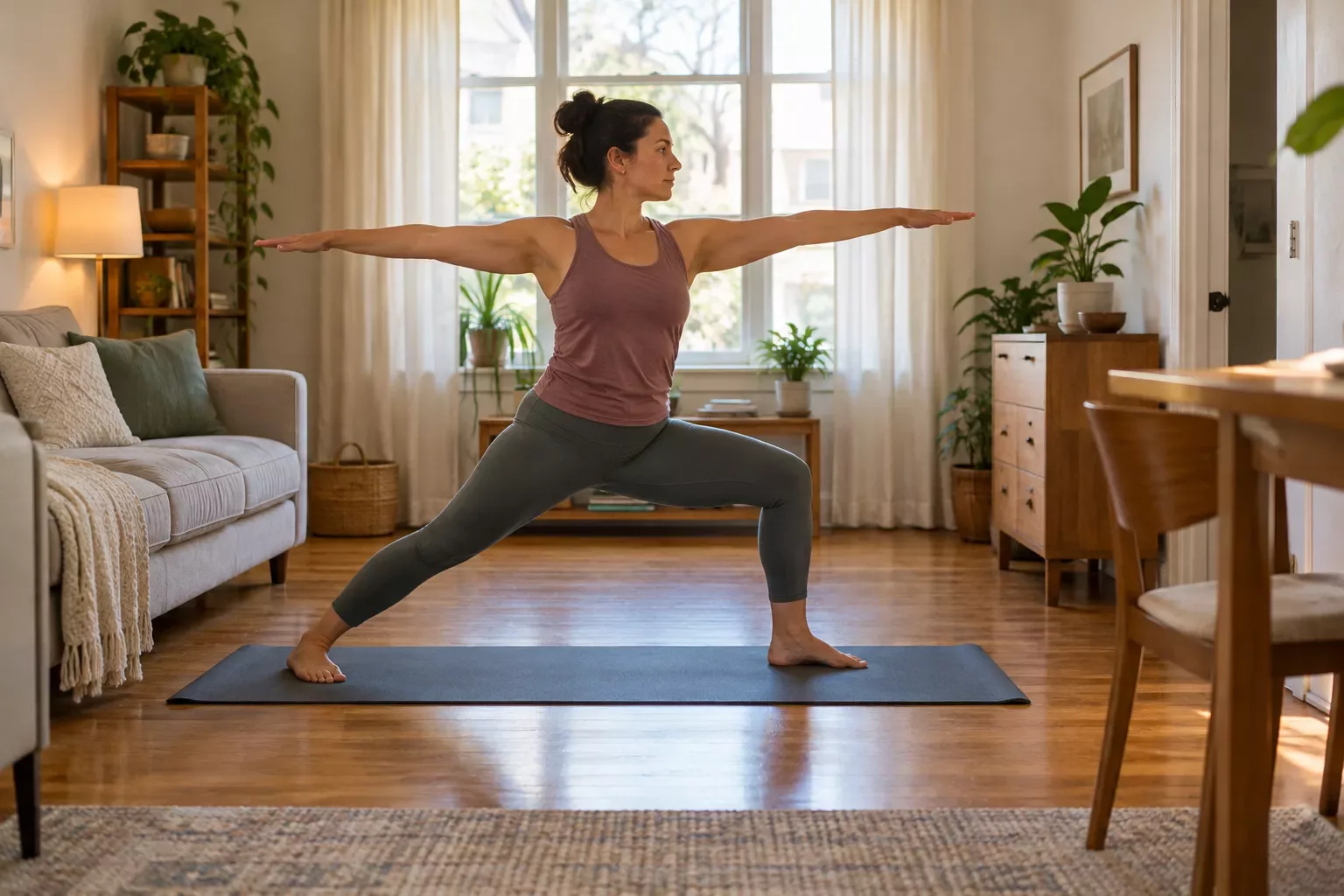
Do not place a screen stand in the place where you naturally step. Keep the route to the door open as well. A practical room arrangement supports entering, practicing, pausing, and leaving—not just the pose shown in the video thumbnail.
Three small-room situations
A narrow bedroom beside the bed
The strip of floor beside a bed may work for some instruction, but the bed frame can obstruct sideways movement. Choose the class before deciding which direction the mat should face. If the video repeatedly opens to the sides, another format may fit better than turning the mat halfway through every transition.
Keep bedding and charging cables off the floor. The mattress is not automatically a safe balance support or a replacement practice surface. If your available floor is too narrow for the session, choose a suitable seated lesson elsewhere rather than shrinking every movement without guidance.
A living room that becomes a walkway
If people need to cross the room, agree on a short window or use a different area. Do not expect household members to step over your mat while you practice. Pets can also enter without warning, so consider whether a closed door or another time would make the arrangement more predictable.
You can use a clear beginning and end: “I need this area for the next fifteen minutes, then I will put it back.” That makes the request practical and avoids turning the room into a permanent off-limits zone.
A home office that must change use
Give the room two deliberate setups. Work mode needs access to the keyboard, mouse, screen, and documents. Practice mode needs the clearance, surface, and attention required by the selected lesson. Sitting on a mat with a work laptop is not automatically an appropriate alternative workstation.
Move rolling furniture and cords outside the movement route. Place the lesson device securely and test visibility from the actual starting position. A work laptop may have software or confidentiality restrictions; follow those arrangements rather than changing them for a class. Do not balance a phone on a rolling chair or put a charging cable across the floor path.
Before beginning, decide whether you have a genuine permitted break or must remain immediately available. Following an unfamiliar sequence while monitoring a meeting or responding to messages divides attention. If you cannot give the lesson the attention it needs, take an ordinary brief pause and save the class for a named later opportunity.
Keep a three-option plan: the prepared class when space and attention are available, a familiar appropriate break when the gap is brief, or another activity when neither condition is met. Agree on a specific window with household members rather than expecting the room to remain off-limits indefinitely.
After practice, return the chair, screen, and input devices to their work positions and clear the walkway. Restoring the room is part of the setup plan, not an optional step after the recording ends.
Make the room easy to restore
Give each object a return location. A mat can go to its usual dry storage spot, a moved table can go back, and the device can return to the work area. If putting things away consistently takes longer than the practice, reconsider the arrangement.
You might leave a small photo of the cleared setup in your personal notes. That is a reference for your next session, not something you need to publish. It helps you remember the details that mattered, such as which side of the room kept the screen visible.
Separate the wish list from the actual requirement
A decorative corner can be enjoyable, but it is not a prerequisite. Before adding objects, ask whether they improve the practice or reduce available clearance. Keep candles, plants, and water glasses away from the movement path. You can have a welcoming room without making it harder to use.
Test whether the setup is repeatable
Try the reset before committing to the room
Set up the area once without a class running, then restore the room. Notice which steps require help, which objects have no temporary home, and whether a doorway becomes difficult to use. If the arrangement only works when someone else carries a heavy item, it may be unsuitable as your regular independent setup. Choose a simpler room plan or another practice format.
The test also reveals time you might otherwise overlook. A short lesson can become a much larger appointment when preparation and cleanup are complicated. Count that time honestly rather than deciding that you should become faster at moving furniture. You can keep one room for longer planned sessions and another simpler option for ordinary days.
Check the arrangement when the household changes
A new chair, a visiting guest, or a different work schedule can change how the room is used. Reassess the movement area instead of relying on the arrangement from last month. Even a small object in the route can matter when your attention is on instruction.
Keep storage and decoration outside the usable movement footprint. It is fine to enjoy a welcoming environment, but the area does not become more suitable because it looks like a yoga photograph. Make the practical choices first: stable surface, enough clearance for this lesson, understandable instruction, and a predictable way to finish. Those details let a small room serve a real practice without pretending it is a studio.
Continue learning
- Can You Do Yoga on Carpet? What Beginners Should Check
- How to Follow an Online Yoga Class Without Constantly Looking at the Screen
Questions and answers
Can I practice if only my mat fits between the furniture?
Possibly, but only if the chosen class also fits. Your arms, feet, and transitions may need space outside the mat. Preview the actual movements and assess the room before attempting them. If you cannot provide the required clearance, select another suitable format. Do not assume mat fit proves movement fit, and do not attempt an unfamiliar pose simply as a room-measuring exercise.
Do I need to face the screen throughout the session?
You need a way to understand the instruction without repeatedly twisting to look. Clear verbal cues and previewing can help, but a screen behind you is often a setup problem. Test visibility from ordinary seated and standing positions. If a class turns frequently and you cannot follow safely in the room, choose a clearer introductory lesson or another device location.
Is practicing beside a bed the same as practicing on a bed?
No. A clear area beside the bed still uses the floor and its surface characteristics. A mattress introduces different support and stability. Do not transfer instructions between those surfaces automatically. A session specifically adapted to a bed also requires its own suitability assessment, especially when medical or mobility needs are involved. A small bedroom does not make the mattress the default exercise platform.
What if I cannot keep the room clear every day?
Choose a realistic practice window and keep another option available. You might use a suitable seated class in another room, practice on different days, or select a shorter session when the space is available. The goal is a repeatable opportunity, not permanent ownership of a shared room. If interruptions remain unpredictable, change the arrangement rather than rushing through a class between them.
What should I do when a small room is also my workspace?
Give work and practice separate setups, even if they occupy the same floor area. Before starting the class, move rolling furniture and cords out of the movement route and place the device where the lesson is understandable. Afterward, restore the arrangement you use for work rather than typing from a position chosen for watching yoga. If switching between the two requires too much furniture moving, choose a simpler suitable format or reserve the larger rearrangement for less pressured occasions.
How can I check the space without starting a class?
Preview the selected lesson first, then rehearse the room arrangement rather than unfamiliar poses. Place the device, move lightweight obstructions, and check ordinary standing or seated visibility as appropriate. Confirm that doors and shared routes remain usable. Restore the room once to see whether cleanup is manageable. This trial reveals logistical problems before playback creates pressure to continue. It cannot determine whether an unfamiliar movement or adaptation is suitable for your individual needs.