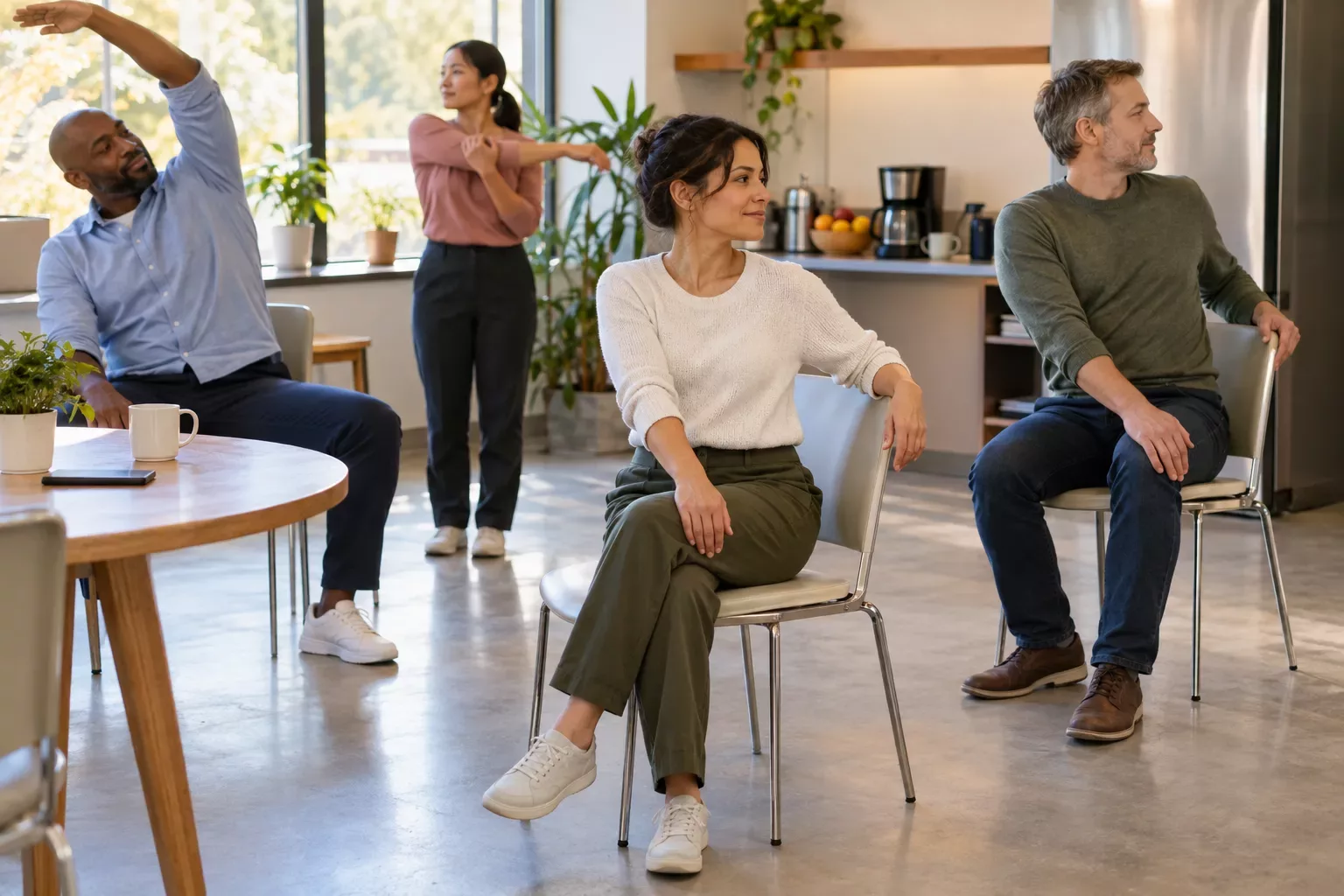
This guide is for the person arranging an optional activity, rather than for an individual choosing a routine. The organizer manages permission, timing, instruction, and privacy without assessing coworkers or making participation a workplace requirement.
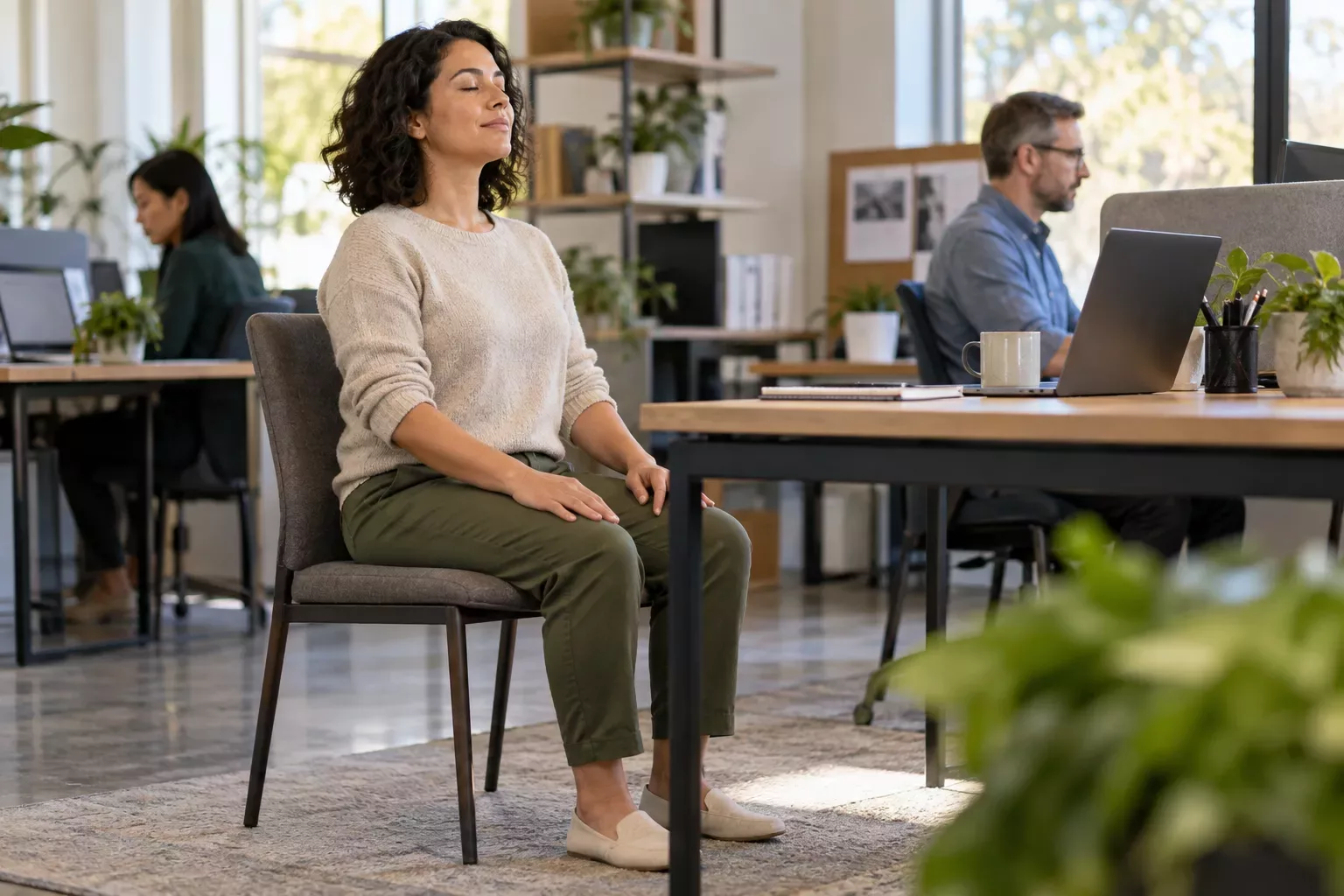
If coworkers are interested in yoga breaks, begin with an optional, accessible arrangement and clear workplace permission. Do not assume everyone wants to exercise together, discuss health, or appear on camera.

Organizing a break is different from being qualified to teach it. If instruction is involved, use an appropriately qualified teacher and a format suited to the group.
Ask about the space and timing first
Check workplace arrangements for breaks, shared rooms, equipment, and online sessions. Choose a time that does not quietly exclude people whose duties prevent them from leaving a station.
Make the duration clear and include time to set up and return. Do not describe attendance as optional while scheduling it in a way that makes absence conspicuous.
Keep participation genuinely optional
Invite people to choose a movement break, another activity, or no participation. Avoid attendance streaks, flexibility comparisons, or requests to explain why someone is not joining.
A person may have a health restriction, a personal preference, or a work responsibility they do not want to discuss. None requires justification to the group.
Use instruction appropriate to the setting
Tell the teacher about the room, chairs, clothing expectations, and whether floor work is practical. Ask how they provide seated and standing options and how participants can request clarification privately.
Do not use a general video as proof that a routine fits every employee. A chair-based class can still include movements that are unsuitable for some participants.
Avoid giving coworkers unsolicited corrections
Unless you are qualified and engaged to instruct, do not adjust someone physically or tell them how a pose should look. Even well-intended comments can create pressure or disclose personal information.
Provide the agreed resource and let the teacher handle instruction within their role. Keep questions about individual limitations private.
Protect privacy in online sessions
Clarify whether cameras are optional and whether anything is recorded. Check that the background does not show coworkers, clients, confidential material, or personal spaces without permission.
Do not take screenshots or share participant images casually. A wellness activity does not remove normal expectations about privacy and consent.
Review the arrangement without measuring bodies
Ask whether the time, room, sound, and format worked. Avoid collecting personal health details or claiming productivity benefits from attendance.
If participation is low, consider whether the arrangement is inconvenient. A walking break or another optional activity may suit the group better.
A respectful workplace practice leaves people free to choose. The organizer's job is to make the arrangement clear and considerate, not to turn yoga into another performance measure.
Write an invitation that leaves room for no
An optional activity needs more than the word optional in its title. The invitation should state the format, duration, location, and who is providing instruction, while making declining ordinary. Avoid requests to explain absence, reply with a health reason, or commit to a streak. People should be able to choose another break without becoming the subject of follow-up questions.
Consider how authority affects the message. An invitation from a manager can feel different from a suggestion between peers. If you organize from a leadership role, avoid language connecting participation to enthusiasm, team spirit, or work performance. Make the arrangement clear enough that employees do not need to guess whether being seen matters more than the stated choice.
Offer information before asking for commitment
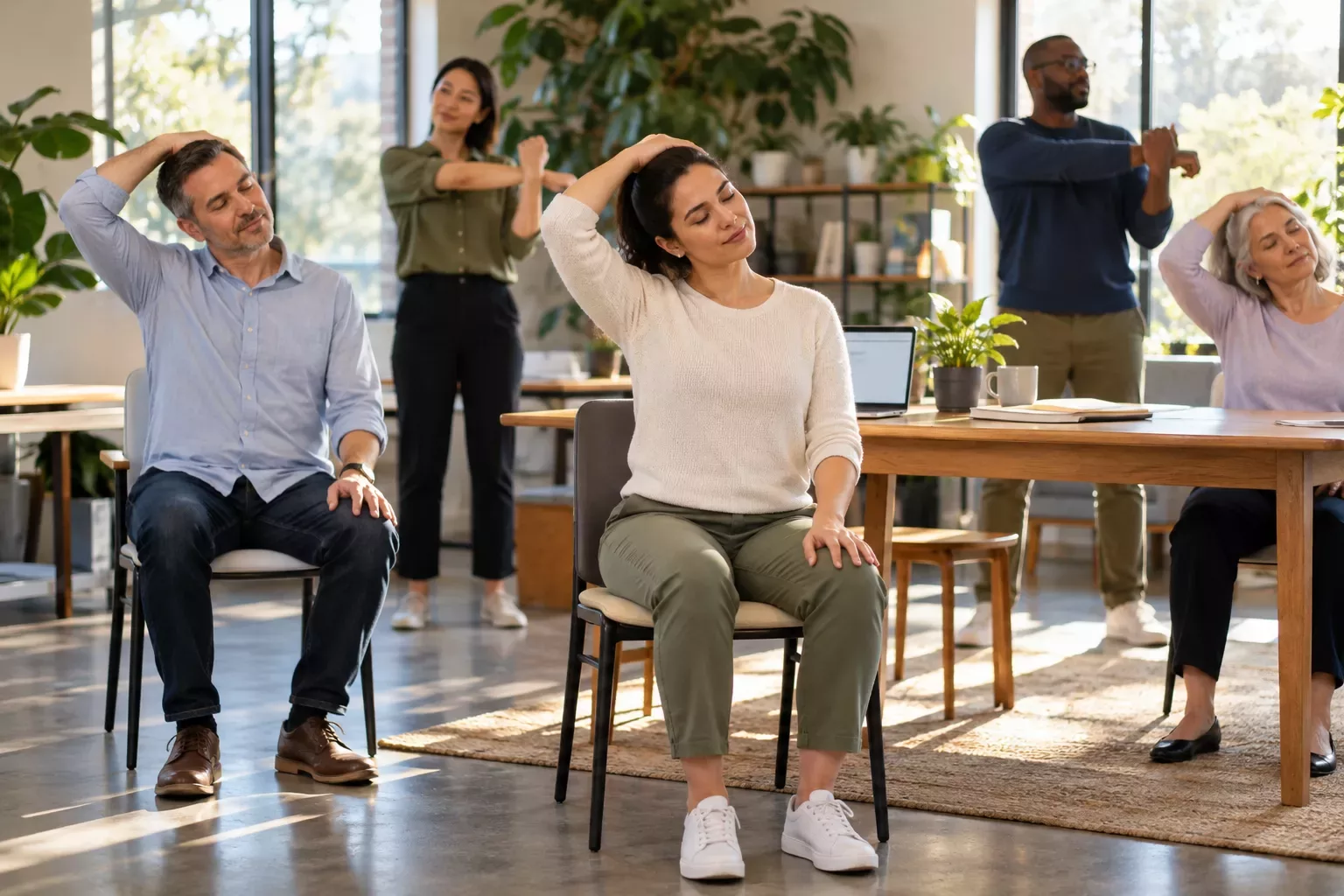
People may need to know whether the session includes floor work, standing, chairs, cameras, or changing clothes before deciding. Provide those details without asking them to disclose why a feature matters. A concise description can answer practical questions while leaving personal circumstances private. If details are not yet known, say so rather than advertising the class as suitable for everyone.
For a hypothetical example, an organizer might announce a brief optional session led by a named teacher, describe the agreed seated and standing options, and explain that cameras are optional under the session arrangement. A colleague could decide privately whether to join. The organizer would not need a spreadsheet of medical conditions to send that information.
Establish the organizer's limited role
Organizing means arranging permission, room access, timing, communication, and the agreed resource. It does not automatically make you an exercise instructor. Keep that distinction visible to yourself as well as the group. When a participant asks whether a movement is right for a specific condition, route the question to an appropriate professional rather than improvising a reassuring answer.
If instruction is part of the event, select an appropriately qualified teacher and discuss the actual setting. Ask about experience with beginners, the planned options, equipment, questions, and how participants can stop or choose not to move. Avoid treating a qualification alone as proof that every planned movement fits every employee. The session still needs an appropriate format and individual choice.
Do not fill silence with personal corrections
As an organizer, you may notice someone moving differently from the demonstration. That does not establish that you should correct them. They may be following private guidance, using an option, or simply choosing to rest. Do not touch, reposition, or coach coworkers unless you are appropriately qualified, engaged in that role, and have the relevant consent.
Provide practical help within your role instead: turn down the audio if requested, clarify where to put belongings, or contact the teacher about a general instruction question. Those actions can improve the event without interpreting another person's body. Avoid turning a supportive atmosphere into informal observation of who appears flexible or committed.
Check access without collecting private histories
Access begins with ordinary logistics: can the people invited reach the room, hear the instruction, understand the format, and use the available equipment? Ask about practical requirements through an appropriate private route. You do not need to ask participants to announce diagnoses in a group chat. Collect only the information necessary for the arrangement and direct individualized questions appropriately.
Timing matters as well. A session available only to one shift or to employees who can freely leave a station may not be equally available. That does not mean every event must serve everyone simultaneously, but the invitation should describe its limits honestly. Avoid presenting attendance as a measure of interest when work duties constrain participation.
Keep alternatives ordinary
Someone may prefer walking, quiet rest, or spending the break differently. Do not require an equivalent exercise to justify declining yoga. The organizer's responsibility is a respectful optional arrangement, not maximizing movement compliance. If you offer another activity, keep it genuinely optional too rather than creating a second required choice.
If a participant joins and then stops, let that be normal. Avoid asking publicly what happened or encouraging another attempt. A teacher can state that resting or leaving is acceptable within the session's arrangements. The organizer can support that message by not treating completion as a public achievement to be recorded.
Agree on privacy before the session
Clarify whether the event is recorded, whether cameras are optional, and whether any images will be used. Do not surprise participants with a group photo at the end. Consent to attend a break is not automatically consent to appear in internal publicity, social media, or a recording. If recording is unnecessary, leaving it off simplifies the arrangement.
For online events, check what the camera sees in the actual room. Confidential documents, clients, coworkers, and personal home details may be visible. Give participants practical information about camera settings without requiring a display of their surroundings. An organizer should not demand that everyone prove participation through video or screenshots.
Separate attendance logistics from health information
If a room booking needs a head count, collect the minimum practical information for that purpose. Avoid expanding a simple attendance list into a record of symptoms, perceived effort, or claimed benefits. Follow workplace data-handling arrangements and avoid unnecessary retention. A wellness event does not need an informal health file.
Likewise, do not ask employees to send body photos or flexibility measurements as feedback. Such data do not answer whether the sound worked or the room was accessible. Keep the evaluation tied to the event you organized and leave individual health outcomes outside the organizer's assessment.
Review the event with practical questions
Ask whether the time, duration, location, audio, and format were workable. An anonymous or low-pressure route may suit the setting, but avoid promising anonymity if the tool does not provide it. A small group can make identities easy to infer even without names. Keep questions optional and avoid asking for medical explanations of a low rating.
If few people participate, consider the logistics before sending more invitations. The timing may conflict with duties, the room may be inconvenient, or the format may not appeal. It is also possible that people simply prefer other breaks. Do not claim productivity, health, or morale improvements from attendance alone. The review should help you decide whether to continue, change, or end the arrangement respectfully.

Continue learning
- Chair Yoga at Work: A Beginner's Guide to Getting Started
- Discreet Desk Yoga in a Shared Office: A Beginner's Practical Guide
Questions and answers
Can I organize a yoga break without being a teacher?
You can handle logistics while using appropriate instruction from someone qualified for the role. Keep your responsibilities clear and avoid prescribing movements or individual adaptations. Practical organization and exercise teaching are different tasks, even when the event is informal and brief.
How do I make participation genuinely optional?
Use clear language, avoid public explanations for absence, and keep attendance separate from performance or team commitment. Allow other break choices without justification. If you have authority over invitees, consider how your message may feel despite the word optional.
Should I ask everyone about medical conditions?
Do not collect private histories as a routine organizing step. Provide clear format information and an appropriate private route for practical access needs. Questions about an individual's exercise suitability belong with an appropriate professional, rather than a group signup sheet.
Can I take a group photo after the session?
Do not assume attendance includes permission for photographs. Explain any proposed image use beforehand and obtain the relevant consent through appropriate workplace arrangements. Consider whether a photo is needed at all. Avoid pressuring participants to appear in publicity to demonstrate participation.
What if someone asks me to correct their pose?
If you are organizing rather than teaching, direct the question to the teacher or another appropriate source. Do not improvise hands-on adjustments or individualized advice. You can help with sound, space, and access while staying within the role you agreed to perform.
How should I measure whether the event succeeded?
Use practical feedback about time, access, instruction clarity, room, and sound. Do not infer health or productivity benefits from attendance or collect body measurements. A respectful event may also lead to the decision that another optional format better suits the group.