
The advice here is for an individual taking a personal break in a shared office. Organizing a group session requires separate decisions about invitations, instruction, access, and privacy.
In a shared office, the best movement break respects the people and space around you. Keep the activity understandable, quiet, and within your own area. You do not have to make a group announcement or encourage coworkers to join.
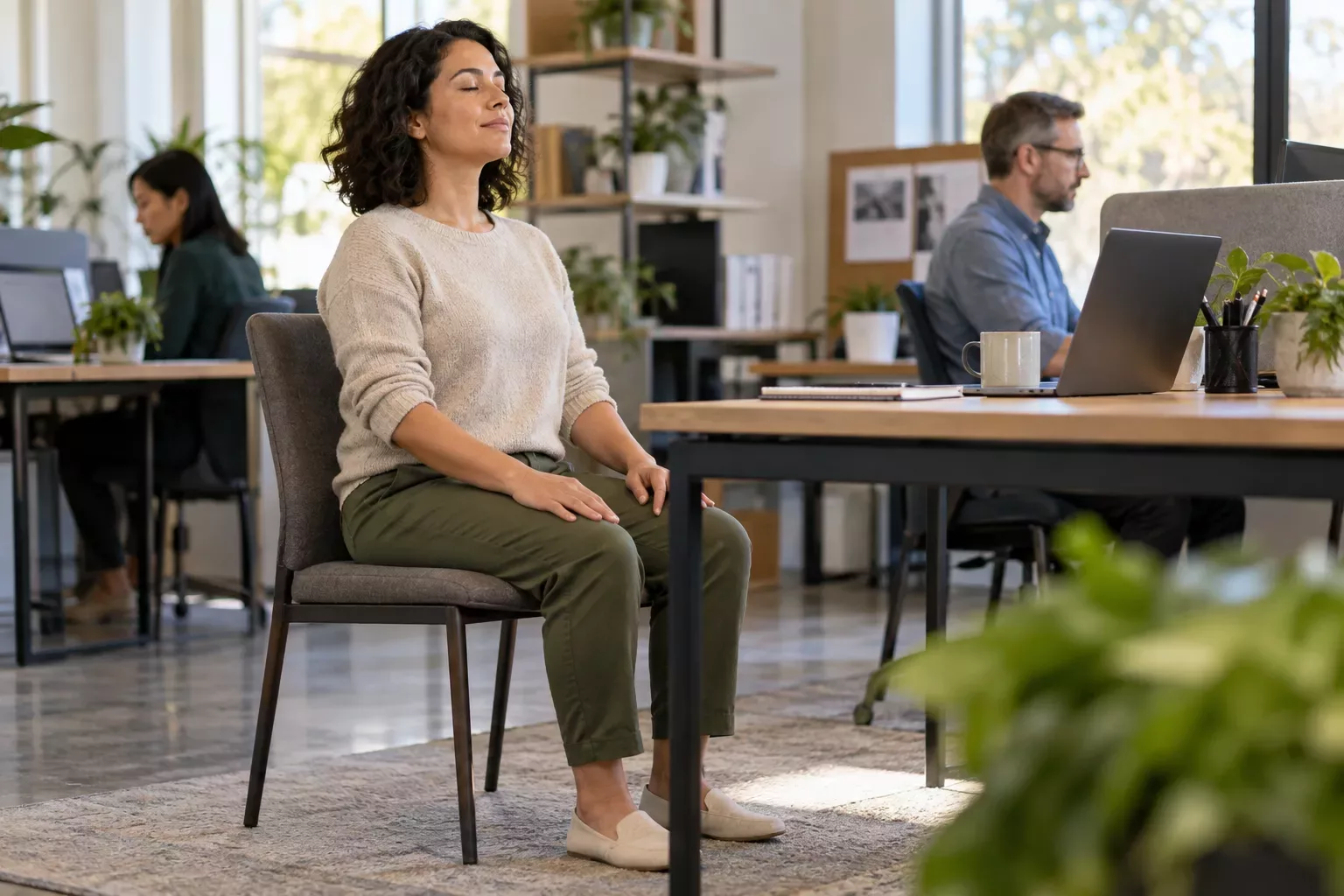
Discreet should mean considerate, not hidden multitasking. Give even a small movement enough attention to do it deliberately.
Pick an appropriate moment
Use a permitted break or a natural pause when you are not expected to type, speak, or respond immediately. Avoid beginning a movement sequence during a conversation that needs your attention.
If you are unsure about local expectations, ask about using a quiet break area. A workplace policy may matter more than whether the movement itself is small.
Stay within your own space
Choose a stable seat or a clear standing area. Keep arms and feet out of neighboring workstations and walkways. Preview the class so an unexpected wide reach does not surprise you halfway through.
Do not use a coworker's desk, chair, or cabinet as support. Do not move shared furniture without agreement.
Keep the format simple
A brief seated practice with small arm and shoulder movements may be easier to manage than a flow with repeated transitions. If your chair or clothing is unsuitable, choose another kind of pause.
You can also spend a moment sitting comfortably, looking away from the screen, and breathing normally. That is a quiet break; it does not need to be presented as a complete yoga class.
Manage sound and video
Use headphones if you need spoken instruction. Set the volume so you can hear important sounds in the room. Avoid playing music or an instructor's audio through shared speakers.
For a live online class, consider privacy. Your camera may show other people or confidential material in the background. Use an appropriate location and follow workplace rules rather than assuming headphones solve every issue.
Have a short explanation ready
If someone asks, a plain response is enough: “I am using part of my break for a short seated movement session.” You do not have to discuss health details or defend a personal preference.
Likewise, accept that another person may not want to participate. Avoid unsolicited posture advice or comments about how long a coworker has been sitting.
Return the area to normal
Reset the chair, put away the device, and leave the walkway clear. If the office is too busy for the chosen session, save it for home and use a simpler change of activity at work.
A considerate practice fits into the working environment without claiming the space around it. Keep the break flexible enough that it remains useful even when the room, schedule, or level of privacy changes.
Decide what privacy means in your office
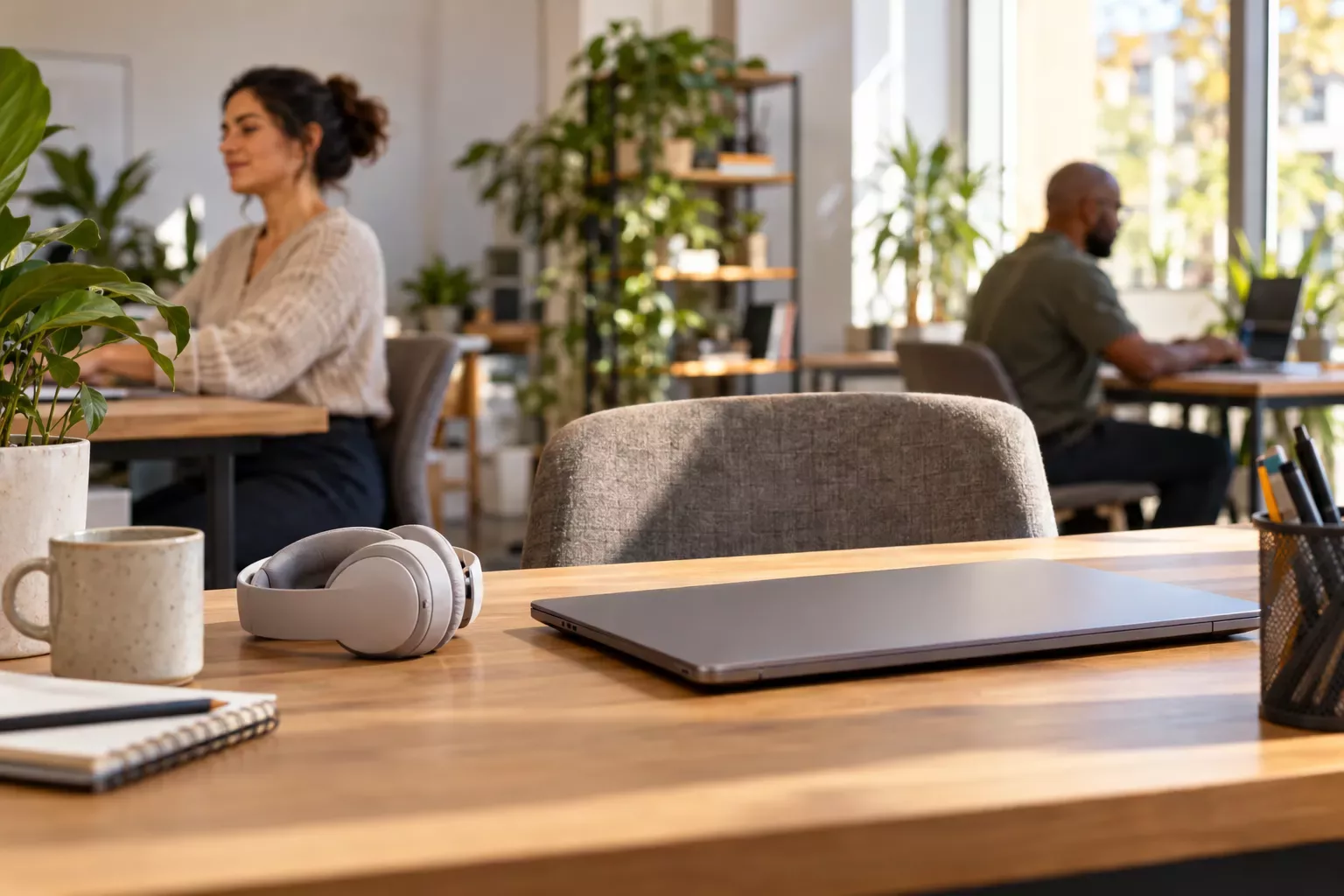
Privacy is more specific than being out of the center of the room. You might want freedom from a passing comment, a space without a camera, or simply enough distance to move your arms without distracting a neighbor. Name that need before selecting a location. A glass meeting room can offer more floor clearance while still leaving you highly visible. A quiet corner may be private but block access to shared storage.
You do not need complete privacy to take an ordinary break, but you do need a setup you can use comfortably. If the effort of hiding a movement makes you twist toward the screen, rush, or keep checking who is watching, change the activity or location. A smaller visible action is often easier to manage than an elaborate sequence performed covertly beneath a desk.
Check the immediate neighbors and traffic
Look beyond the empty space directly in front of you. A coworker may roll backward, a delivery cart may pass, or a cabinet door may open into the same area. Choose a movement envelope that remains inside your available space through the entire action. If you need to negotiate more room, ask about the space rather than assuming a colleague will move because you have started.
Keep shoes, bags, and clothing together within your own area. Leaving footwear in an aisle or hanging a jacket over someone else's chair turns an individual break into a shared inconvenience. A session that needs extensive rearrangement may be better suited to another room or a different time. Discretion includes how you set up and put away, not just the size of the movement.
Build a quiet plan that requires little explaining
Choose one familiar option for the days you have permission and space to take a short break. Learn it somewhere you can concentrate before using it in the shared office. This reduces the need to replay instructions, inspect the screen, or solve new positioning questions while people work nearby. Familiarity is about understanding the activity, not progressing to a bigger range of motion.
For a hypothetical example, an employee in a shared administrative room might choose a short supported seated pause with a low arm movement already learned from a suitable teacher. On a day when the stable chair is unavailable, that employee might take an ordinary permitted walking break instead. The plan remains usable because it includes an alternative, rather than depending on making the rolling office chair work at any cost.
Give attention to one activity at a time
Do not confuse small movements with movements that need no attention. Stop typing and put the mouse down before beginning the practice. If someone needs your response, finish or stop the movement before turning toward them. Trying to maintain a pose while answering an unexpected question can pull you outside the space or range you intended.
The same principle applies to phone calls. If you are listening to confidential or complicated information, that conversation may need all your attention. A routine labeled discreet is not a reason to combine it with work that would normally require concentration. Choose the pause when it is genuinely a pause, within your workplace arrangements.
Make sound and screen choices before the break
If instruction requires headphones, connect them before starting the allotted window and check the volume. Avoid a long search through a bag while the class continues. Keep enough awareness of the surroundings to notice the ordinary signals your role requires. If headphones are not appropriate for the setting, select a suitable silent reminder or another activity rather than playing audio through shared speakers.
Turn off autoplay where possible. An unexpected advertisement, music track, or next video can make a quiet session suddenly audible or consume the rest of the break. Downloading an authorized resource for offline use may be an option, but first check the provider's terms and workplace device rules. A saved page is not necessarily available without an internet connection.
Position the device without borrowing another person's space
A screen on the adjacent desk may give a better viewing angle, but that does not make it available for your use. Keep the device stable within your area and avoid balancing it on a narrow shelf or pile of papers. If a seated session requires you to look over your shoulder repeatedly, the arrangement may need changing before the lesson begins.
For live classes, consider both directions of visibility. The instructor may see confidential papers, a customer, or coworkers who have not agreed to appear. Other participants may also be visible on your screen. Choose a location and camera setting consistent with workplace rules and the class arrangement. Headphones alone do not resolve these visual privacy questions.
Handle attention without turning it into a presentation
A short explanation can close a conversation kindly: “I am taking a brief movement break, and I will be ready when it ends.” If the colleague is curious, you can offer to share the resource later without teaching while you are still using the break. You are not obliged to discuss a health concern, describe your body, or provide a reason for wanting privacy.
If someone makes you uncomfortable, focus on the boundary that needs respecting. You might say, “I prefer to keep this break personal,” or choose another approved location. If the behavior continues, use the workplace support route appropriate to the situation. Avoid treating the yoga routine itself as the solution to an interpersonal problem.
Let other people choose their own breaks
Do not comment on a coworker's posture or invite them repeatedly after a refusal. Someone may enjoy walking, resting quietly, or spending the break on an unrelated personal task. An individual practice does not need to become an office initiative. If a group activity is later proposed, organizing consent, instruction, and privacy is a separate task with different responsibilities.
Likewise, do not photograph or post your session with neighboring people or screens in the frame. Even a casual progress photo can reveal information that was never intended for an audience. Keep any personal notes focused on your own logistics, such as whether a particular area was available, rather than recording who watched or declined to join.
Evaluate whether the arrangement respects the room
After several attempts, assess the practical details. Could you take the break without moving another person's belongings? Was the route clear? Did the audio stay private? Could you finish without racing back to the keyboard? These questions give you useful adjustments without requiring anyone to judge the appearance of your movements.
Change one obvious obstacle first. A different location may solve both visibility and sound, while a shorter familiar routine may solve repeated setup delays. If the environment remains a poor fit, save the learning session for home. Choosing a different work break is a reasonable response to the setting, not evidence that you lack commitment.

Continue learning
- Desk Yoga in Work Clothes: How to Keep the Break Practical
- Desk Yoga Breaks at Work: Frequency, Reminders, and Meeting Gaps
- Introducing an Optional Yoga Break at Work: A Respectful Beginner Approach
Questions and answers
Does discreet desk yoga have to be invisible?
No. Considerate movement can be visible and still fit the room. Trying to make every action invisible may encourage rushed or awkward choices. Aim for a clear personal area, quiet instruction, appropriate timing, and enough attention to the activity you selected.
What can I say if a coworker asks what I am doing?
A plain explanation is enough: “I am using my break for a short movement session.” You can keep medical or personal details private. If you do not want a longer conversation, explain that you will be ready to talk after the break.
Can I practice while my camera is off in a meeting?
A hidden camera does not create a genuine break or reduce the meeting's attention requirements. Finish the work responsibility first. Use an appropriate gap for a familiar activity instead of assuming that being unseen makes simultaneous practice suitable.
Do I need to invite the whole team?
No. An individual break can remain individual. Group invitations introduce separate questions about permission, accessibility, instruction, and consent. You can share a resource when asked without becoming an organizer or offering exercise advice to coworkers.
What if the only quiet location is a hallway?
Check whether it is an appropriate permitted space and whether people can pass freely. A quiet hallway can still be an access route or contain doors opening unexpectedly. If movement would interfere with access, choose another location or a different break format.
How should I track whether the plan works?
Record practical obstacles briefly: chair unavailable, room noisy, or class too difficult to follow quietly. You do not need photos, body measurements, or a public streak. Use the notes to improve your own setup while keeping colleagues outside the record.