
This guide addresses the clothes and shoes you are already wearing at work. Use it to choose a workable movement format; it is not a studio-outfit shopping guide or a product ranking.
You can look for a small seated or standing movement break without changing into workout clothes. The key is to match the movement to the clothing, footwear, and space available rather than attempting a full class in restrictive office wear.
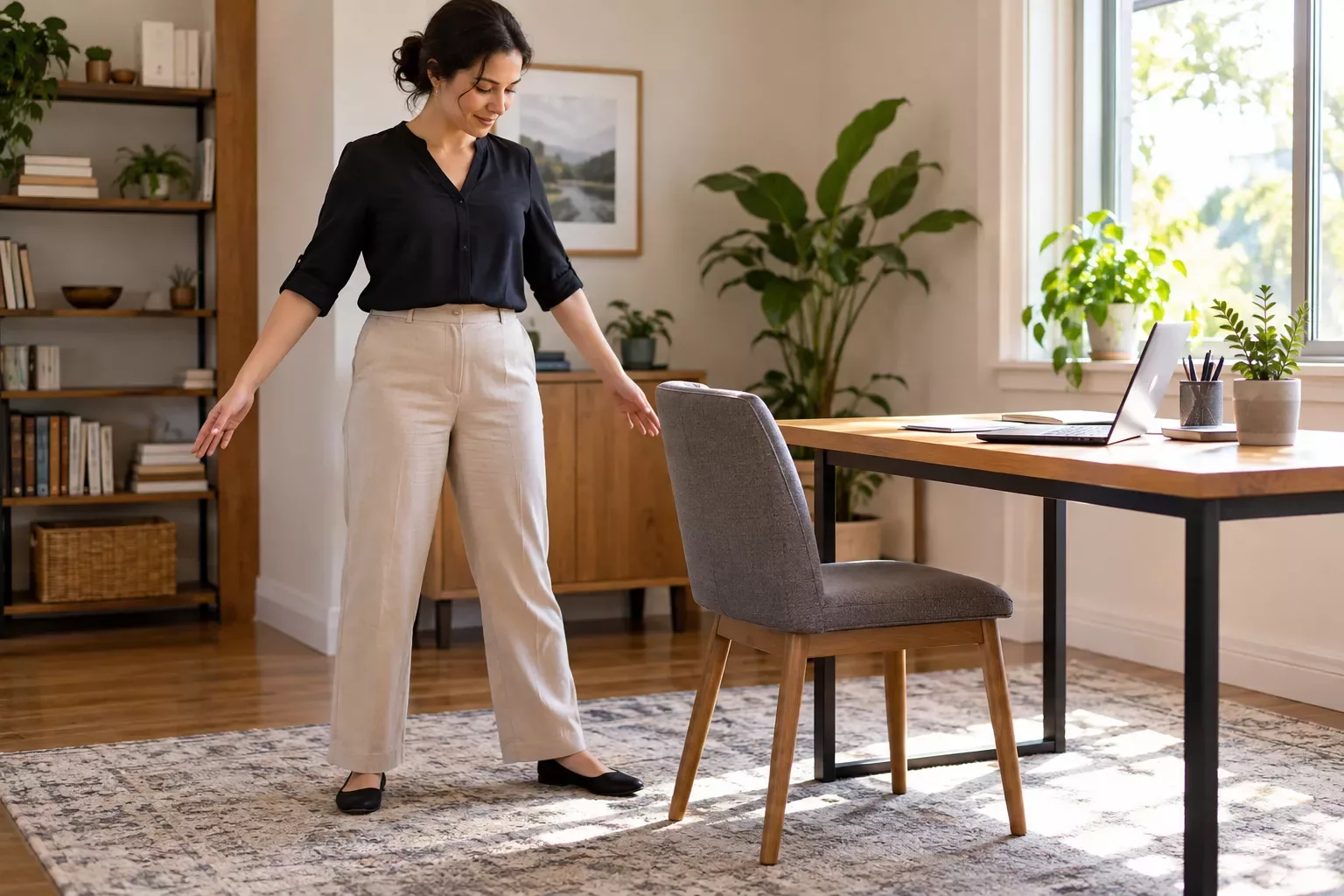
No outfit makes every movement appropriate. If the clothing interferes, choose another version or a different break activity.
Test the range before starting the class
While seated or standing comfortably, check a small arm reach and an ordinary change of position. Notice pulling at the shoulders, waist, hips, or knees. Avoid taking a deep position simply to see whether a seam will hold.
A jacket may limit arm movement. A fitted skirt may restrict stepping. A lanyard or loose scarf can catch on furniture. Remove or secure items when appropriate to the workplace, or keep the break to a simpler format.
Favor movements that stay within the outfit
Choose a class that offers lower arm positions, small ranges, and no floor work if that is what your clothes permit. Do not hold a pose differently just to keep a garment in place while also trying to follow instructions.
Avoid treating “office yoga” as a guarantee that a class suits formal workwear. Preview the actual session and decide whether it fits.
Keep footwear stable
Standing movement in unstable heels or loose shoes may be a poor choice. You can use a seated option or an ordinary non-exercise break instead.
Do not assume taking off shoes solves the problem. Socks can slide on some surfaces, and shared-office expectations may also matter. Choose a setup with predictable footing rather than trying to imitate a barefoot video.
Think about temperature and timing
Select a gentle session if you need to return directly to work without changing. A slow pace and a smaller range may be more practical than a physically demanding flow, but people respond differently; no routine can promise that nobody will feel warm or sweat.
Leave time to put your jacket back on, reposition the chair, and return to the task. The setup and finish are part of the break.
Use discretion without compromising control
You do not need large, conspicuous movements to take a useful pause. Yet trying to hide an unfamiliar exercise under the desk can divide your attention. Choose something clear and manageable rather than performing it secretly while typing.
In a shared area, use headphones for instruction and keep the walkway open. Follow workplace policies about break times and shared space.
After trying a session, note which clothing details mattered. That information can help you choose seated or standing options on different days. The aim is a break that fits your working life, not a costume change or another performance standard.
Let the outfit define the available format
Workwear adds practical constraints that a home yoga video may not anticipate. A fitted sleeve can limit arm movement, a skirt can limit stepping, and a belt can interfere with a seated position. These details do not make a break impossible, but they change which session fits. Inspect the actual clothing rather than assuming a class labeled office yoga will accommodate it.
The goal is a movement choice that stays manageable within the outfit. You should not need to hold a garment in place, protect a seam, or change your balance to complete the instruction. If the clothing requires constant attention, simplify the activity or choose another kind of break for that day.
Make a small precheck rather than a flexibility test
Try only an ordinary small arm movement and a comfortable change of position that are already appropriate for you. Notice whether fabric pulls, accessories move toward furniture, or footwear feels unpredictable. You are checking the outfit's behavior, not exploring the deepest range it might survive.
If you can comfortably remove a jacket or secure a loose item within workplace expectations, do so before the routine begins. If changing the outfit is impractical, keep the limitation as a selection criterion. Do not wait until halfway through a class to discover that every movement requires a clothing adjustment.
Compare common workwear constraints
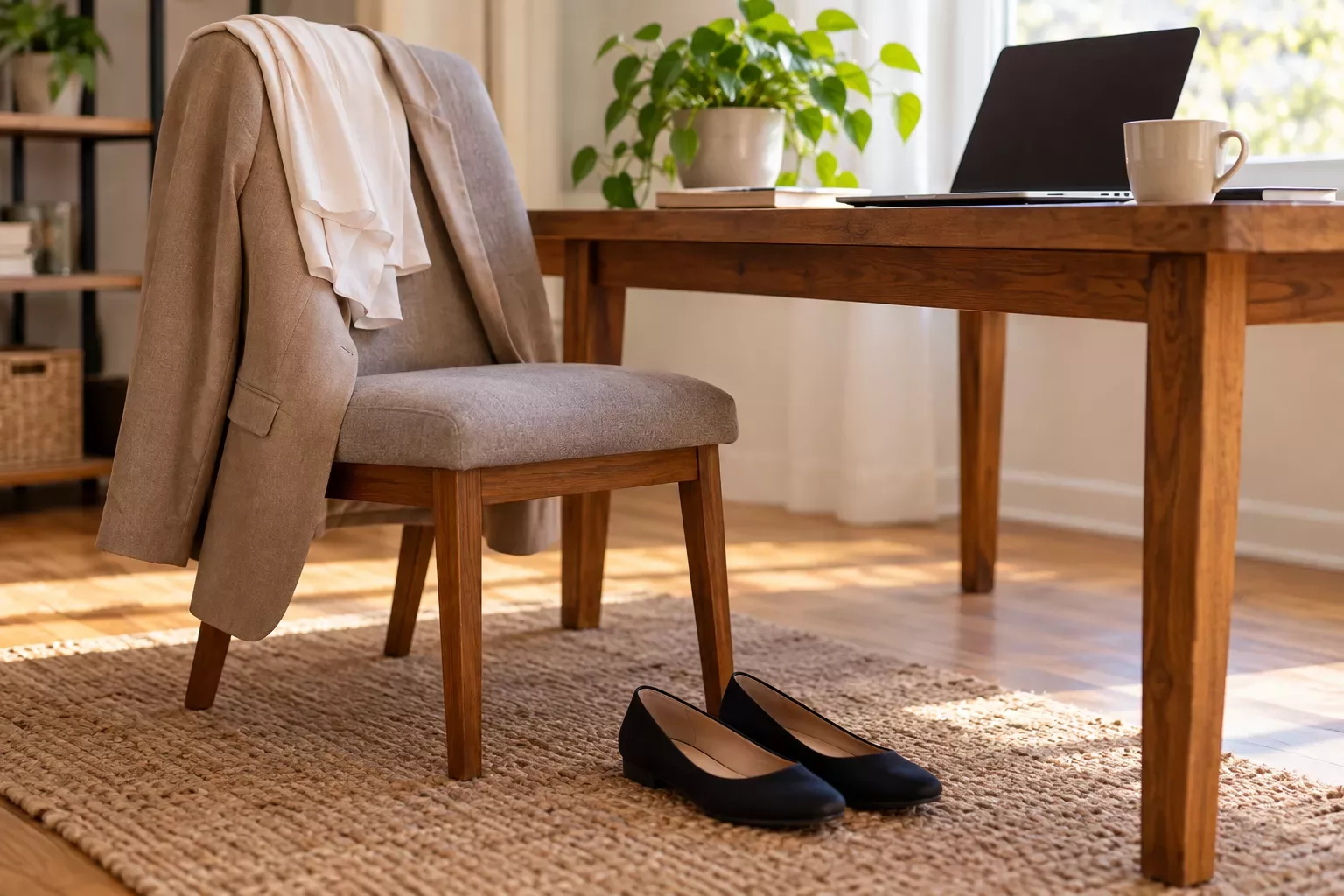
Different garments call for different questions. A structured jacket may allow a low forward reach but resist an overhead movement. Fitted trousers may affect getting to the floor or taking a wide stance. A skirt may make an entirely seated format preferable, depending on its cut and the actual session. Avoid universal rules based on garment names alone.
Accessories matter as well. A long necklace, badge, scarf, or loose sleeve can move into the working area. Check whether items can catch, obscure your view, or strike the desk during the intended movement. Secure or remove them when appropriate, or choose an activity that avoids the issue.
| Clothing or footwear feature | A question to ask | A practical format choice to consider |
|---|---|---|
| Structured jacket | Does a small reach pull at the shoulders? | Lower arm positions or a suitable session without reaching |
| Fitted skirt | Are ordinary seated and standing changes unrestricted? | Entirely seated movement when appropriate |
| Restrictive waistband | Can I sit comfortably without holding tension? | A simpler pause or another activity |
| Loose scarf or lanyard | Could it catch on furniture? | Secure it or avoid the affected movement |
| Unstable shoes | Is footing predictable for standing movement? | A suitable seated option or non-exercise break |
| Warm layers | Will this format fit the return-to-work needs? | A brief, gentle format with time to finish |
Do not compensate around a garment
If a sleeve restricts the arm, leaning the torso to reach farther changes the movement. If a skirt restricts stepping, twisting the feet may create another task you did not intend to perform. These compensations can make a simple routine harder to understand, especially while following a recording.
Instead, reduce or omit the movement when appropriate, or select another format. An outfit constraint is useful information about the session you should choose. It is not an obstacle you must defeat to demonstrate commitment, and it does not require a more creative substitution every time the teacher changes position.
Keep footwear decisions separate from imitation
Many yoga videos show barefoot practice, but copying that detail at work may not produce the same setup. The floor may be different, socks may slide, and there may be workplace rules or hygiene expectations. Evaluate the actual footing rather than treating shoe removal as a universal first step.
If standing movement does not fit the available shoes, consider an appropriate seated lesson with a stable chair. That choice still requires checking the chair and the movements. A seated label does not solve every clothing issue, but it may remove the need to perform standing work in unsuitable footwear.
Avoid improvised clothing and shoe fixes
Do not fold, roll, tie, or pin clothing in a way that creates a new distraction or interferes with movement merely to finish a class. Similarly, partly removing shoes or balancing on their edges is not a useful workaround. Keep the setup predictable or choose another break.
You do not need to buy a separate office-yoga outfit to address every constrained day. A practical plan includes multiple appropriate break options. Some days the best fit may be a quiet pause away from the screen, an ordinary walk when suitable, or a different change of task.
Plan the return to work as carefully as the start
Allow time to put a jacket back on, secure accessories, and reset the chair. If the break ends immediately before a meeting, these actions belong inside the window. Choose a shorter activity rather than rushing the final minute or entering the meeting while still adjusting clothing and furniture.
Temperature is another practical variable. A gentle format may be more convenient when you must return directly to work, but no routine can guarantee that every person will remain cool or avoid sweating. Select according to your experience and circumstances rather than a video's promise of a completely invisible workout.
Keep discretion compatible with attention
Small movements can be considerate in a shared office, but trying to hide an unfamiliar exercise under the desk can divide your attention. You may end up monitoring coworkers, clothing, and the screen at once. Choose a clear, manageable activity that fits workplace expectations instead of treating secrecy as the main design goal.
A short explanation is enough if someone asks: “I am taking a movement break.” You do not have to describe personal restrictions or invite participation. Stay within your own area, keep sound private where appropriate, and avoid using shared furniture as equipment without agreement.
A hypothetical outfit-based choice
Imagine Robin usually follows a short standing routine during an authorized home-office break. On a day with a formal jacket and less stable shoes, Robin checks the familiar low reach and decides the standing setup is not practical. A suitable seated option is available with a stable chair, so Robin previews its demands instead.
This invented example illustrates selecting by conditions, not a studied benefit of one outfit or routine. If the seated setup also fails the check, Robin can choose another break. The useful outcome is an appropriate decision without forcing a familiar class to fit a different day.
Keep a small menu instead of one mandatory routine
You can save notes for several conditions: a suitable seated format for limited arm room, a suitable standing format for predictable footwear, and a simple non-exercise pause when neither setup works. Describe the conditions in ordinary language so the choice is easy during a busy day.
Review the menu when your workplace or clothing changes. A routine that fitted one office may not fit another room or chair. Keep the decision focused on actual movement requirements rather than whether the activity looks like a full yoga class. A manageable break should accommodate the working day, including the clothes you need to wear.
Continue learning
- Chair Yoga at Work: A Beginner's Guide to Getting Started
- Standing Yoga at Work: A Short Beginner Break Without Floor Work
- Discreet Desk Yoga in a Shared Office: A Beginner's Practical Guide
Questions and answers
Can I do desk yoga in a suit?
Possibly, depending on the suit and the session. Check small appropriate movements for pulling or restriction, and choose a format that fits without compensating around the fabric. If the outfit interferes, another break activity is a reasonable choice; the class label does not guarantee compatibility.
What should I do if a jacket limits my arm movement?
Remove it when practical and appropriate, choose an explained lower-range option, or omit the movement. Avoid leaning or twisting merely to overcome the sleeve. If many movements conflict with the jacket, select another session rather than continually modifying the class.
Are seated routines always suitable for skirts?
No garment category guarantees suitability. Check the cut, comfort, and actual movement requirements. Some seated classes include wide leg positions, turns, or standing transitions. Preview the lesson and choose according to what you can comfortably do in that particular outfit.
Should I remove heels before a standing break?
Do not assume removal creates predictable footing. Consider shoes, socks, floor, and workplace expectations together. If the standing setup is unsuitable, use an appropriate seated activity or another break rather than improvising a barefoot arrangement in a shared office.
How can I avoid sweating before a meeting?
No routine can guarantee that response for everyone. Choose a gentle, manageable format based on your experience, allow finishing time, and use another break activity when returning immediately to a meeting makes movement impractical. Avoid relying on a video's promise that a session is invisible or sweat-free.
Do I need workout clothes to make the break worthwhile?
The clothing needs to fit the chosen activity, but a special outfit is not required for every short pause. Keep suitable options available and select according to the day. You can take a useful change of activity without forcing a full class into formal workwear.