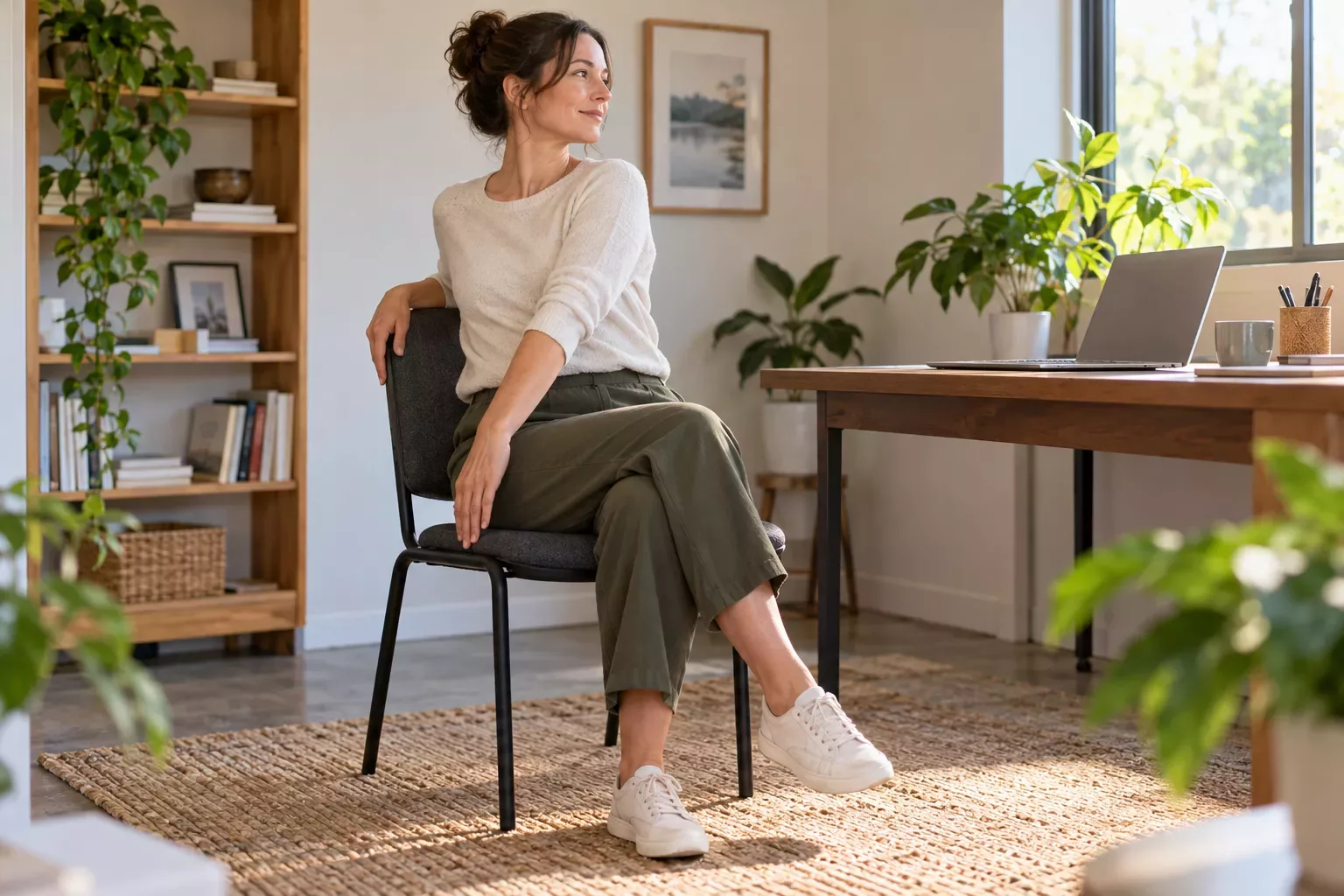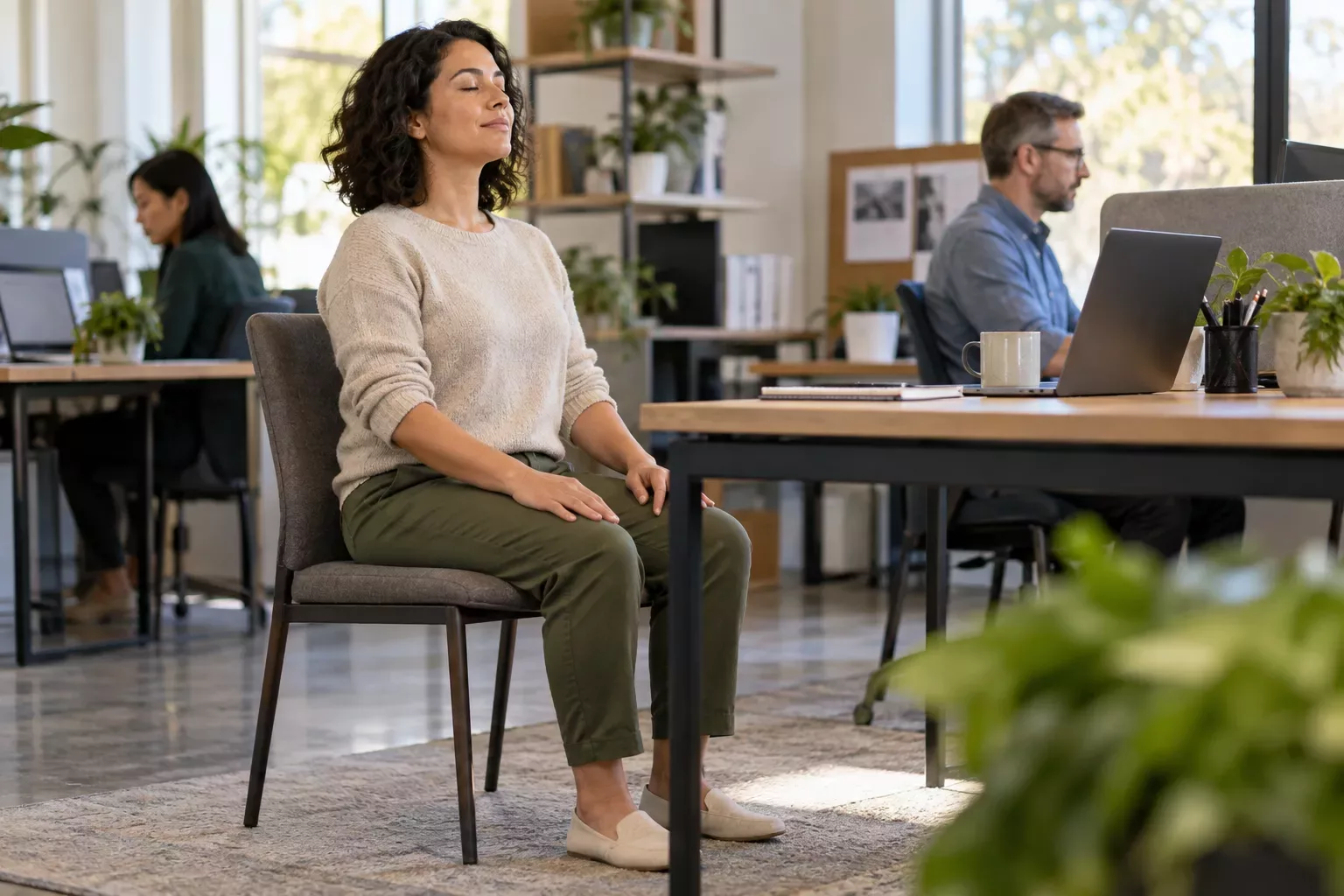
This guide focuses on fitting a chosen practice around a real lunch period: the meal, room, preparation, and return. It does not compare the best time of day to practice or prescribe fasting and meal-waiting rules.
Lunch-break yoga can be practical when you have an appropriate place, a suitable class, and enough time for food and the return to work. It should not require skipping lunch or rushing through movements to fit a calendar promise.

Choose the format according to the break you actually have. A seated lesson, a standing session, and a floor class have different setup needs.
Count the whole break
Include travel to the space, changing if needed, setting up, eating, and getting back to work. A thirty-minute break does not automatically contain thirty minutes of practice.
Choose a shorter class than the total window. Leave room for ordinary delays rather than planning the schedule to the last second.
Decide where the session belongs
A shared break room may have traffic and limited privacy. A bookable wellness room may have rules about equipment and use. Your desk may only allow a small seated option.
Get permission where needed and respect how the space is used. Avoid blocking a walkway or expecting coworkers to remain quiet while they eat.
Plan around food comfortably
People differ in how they feel moving before or after eating. Avoid selecting a class that repeatedly makes you uncomfortable around lunch. You may prefer a short practice before food, a later session, or an ordinary walk instead.
There is no need to turn the lunch break into a strict fasting rule. If you have medication or health-related food requirements, follow individual guidance rather than a generic yoga schedule.
Choose an appropriate level of activity
Preview the class and check its movement requirements. A session advertised as gentle may still include kneeling or repeated floor transitions. Work clothes and footwear also affect the decision.
If you need to return immediately to a meeting, choose a manageable activity rather than expecting a demanding flow to fit without additional preparation.
Build in the return
Put away equipment, restore shared furniture, and leave the space ready for others. Return to a suitable workstation position instead of continuing to perch at the edge of the chair because the class used that position.
Keep any follow-up notes short. “Room available, class too long” is useful information for next time.
Keep another lunch option available
If the room is occupied or the schedule changes, choose a different break activity. Missing the planned class does not mean lunch has failed. Eating, walking, resting, or talking with a coworker may fit the day better.
The right lunch practice respects the purpose of the break as well as your interest in yoga. Start with a plan you can repeat without turning the middle of the workday into another time-management challenge.
Build the lunch plan backward from your return
Start with the time you need to be ready for work again. Then subtract the ordinary return tasks: reaching the workstation, putting belongings away, changing if necessary, and preparing for the next responsibility. Protect time to eat as well. What remains is the possible practice window, which may be much smaller than the break shown on the calendar.
Use your own situation rather than borrowing a schedule from a video description. A nearby room and a class requiring no changing create different logistics from a session across a large building. A lunch option that works at home may not fit an office with shared elevators, limited room access, and a uniform. The arithmetic should include those differences rather than treating them as distractions from practice.
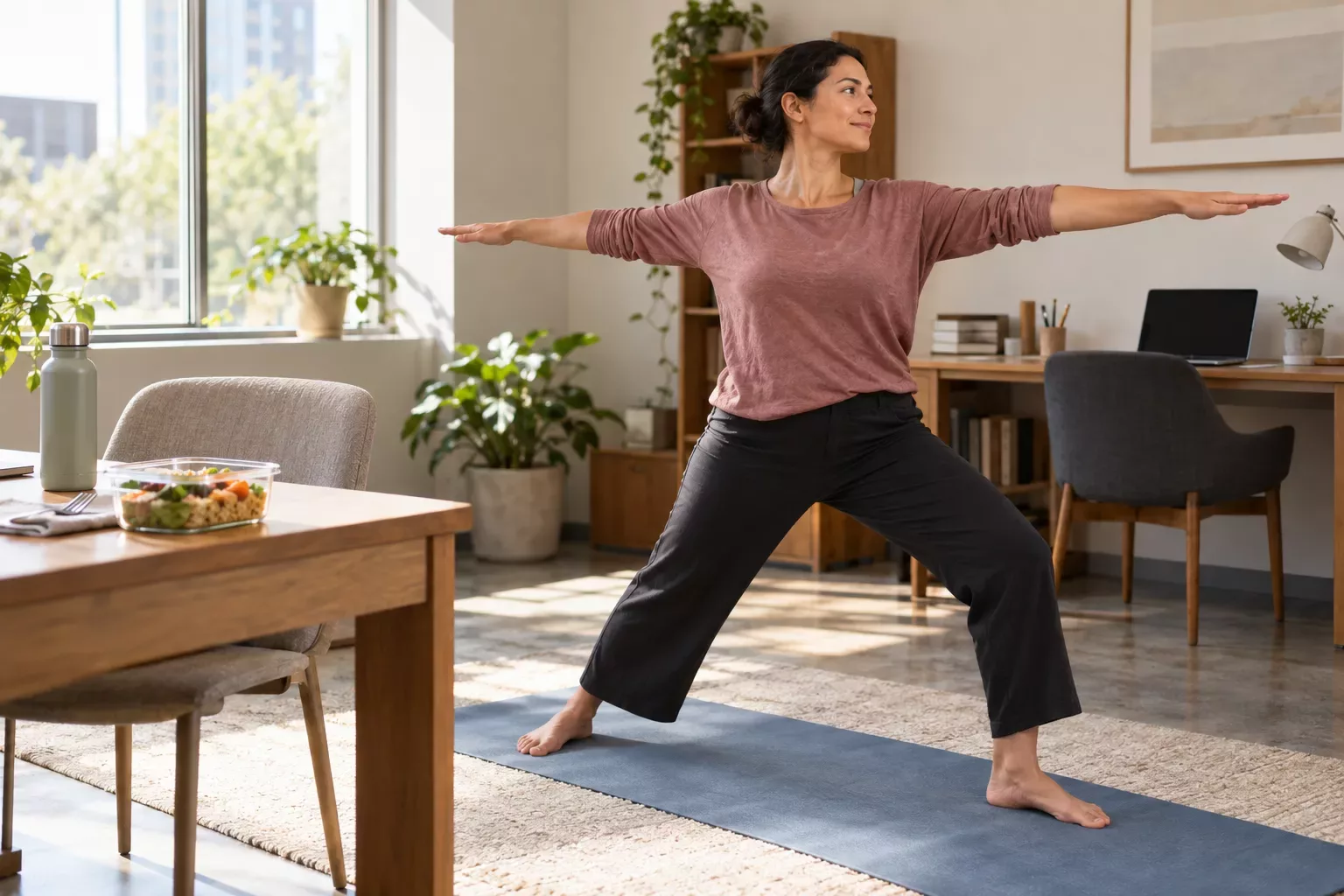
Leave room for ordinary delays
A practical plan can absorb a room opening late, a short conversation, or the need to wash your hands. If any minor delay means skipping food or returning breathless, the plan is too tightly packed. Shorten the session or choose another day. A smaller repeatable arrangement is easier to evaluate than an ambitious plan that only works under perfect conditions.
For a hypothetical example, an employee has a lunch window that must also cover collecting food and walking between floors. After counting those tasks, the employee chooses a brief suitable seated session on one day and an ordinary walk on another. The example does not assume a standard US lunch entitlement. The available break depends on the employee's actual work arrangements.
Compare the available spaces before booking
Different rooms solve different problems. A meeting room may provide quiet but contain chairs unsuitable for movement. A wellness room may have useful floor space but a booking process or rules about equipment. An outdoor location may have room yet involve weather, uneven ground, or little privacy. Choose based on the full activity rather than the room's name.
Check permission, availability, surfaces, lighting, airflow, and how others use the space. Ask whether doors need to remain accessible and whether furniture can be moved. Do not assume an empty room is available simply because no meeting appears to be taking place. If another group arrives, have a straightforward alternative rather than treating the booking as a reason to rush.
Consider hygiene without improvising the workplace
If the session uses the floor, decide whether the surface and your own equipment are appropriate. Keep a mat stored and carried in a way that does not interfere with food areas or walkways. Follow the workplace's cleaning and storage arrangements. A shared break table is not a substitute exercise surface just because the floor is inconvenient.
If you cannot manage floor equipment practically, select a suitable seated or standing format. The lesson should match the setting from the outset. Avoid discovering halfway through that the class expects kneeling or lying down, then trying to adapt every position without instruction. Previewing the actual lesson prevents many lunch-specific problems.
Coordinate food and movement according to your needs
Lunch is also a meal opportunity, and a practice plan should respect that. Avoid advice that automatically removes food to create more exercise time. People differ in their comfort moving around meals and may have individual health or medication instructions. Those needs take priority over a generic class schedule or an online rule about practicing on an empty stomach.
You can consider whether moving before eating, using a smaller suitable activity afterward, or choosing another practice time fits your day. Observe practical comfort without diagnosing it yourself. If a movement repeatedly causes symptoms around meals, stop using it and seek appropriate advice as needed. Do not assume a stronger stretch will solve the issue.
Avoid turning lunch into a performance window
A lunch session does not need to be the day's hardest activity. Think about the return: temperature, clothing, time to change, and the concentration needed for the next task. A short beginner lesson might still be demanding for you. Labels such as gentle or office-friendly are starting points for investigation, not guarantees about how you will respond.
If you want a more involved class, consider whether another time can provide the setup and recovery logistics it requires. That is a scheduling choice, not a judgment about the value of lunch practice. The aim is a format that fits the full middle-of-day context rather than a class that forces every other need into a narrow margin.
Plan the equipment route as well as the session
List what you actually need to carry. A phone, headphones, suitable clothing, mat, towel, water, and meal can become cumbersome when the room is distant. Reduce the equipment only by selecting a format that genuinely needs less. Do not omit necessary support or substitute unstable objects to make the bag smaller.
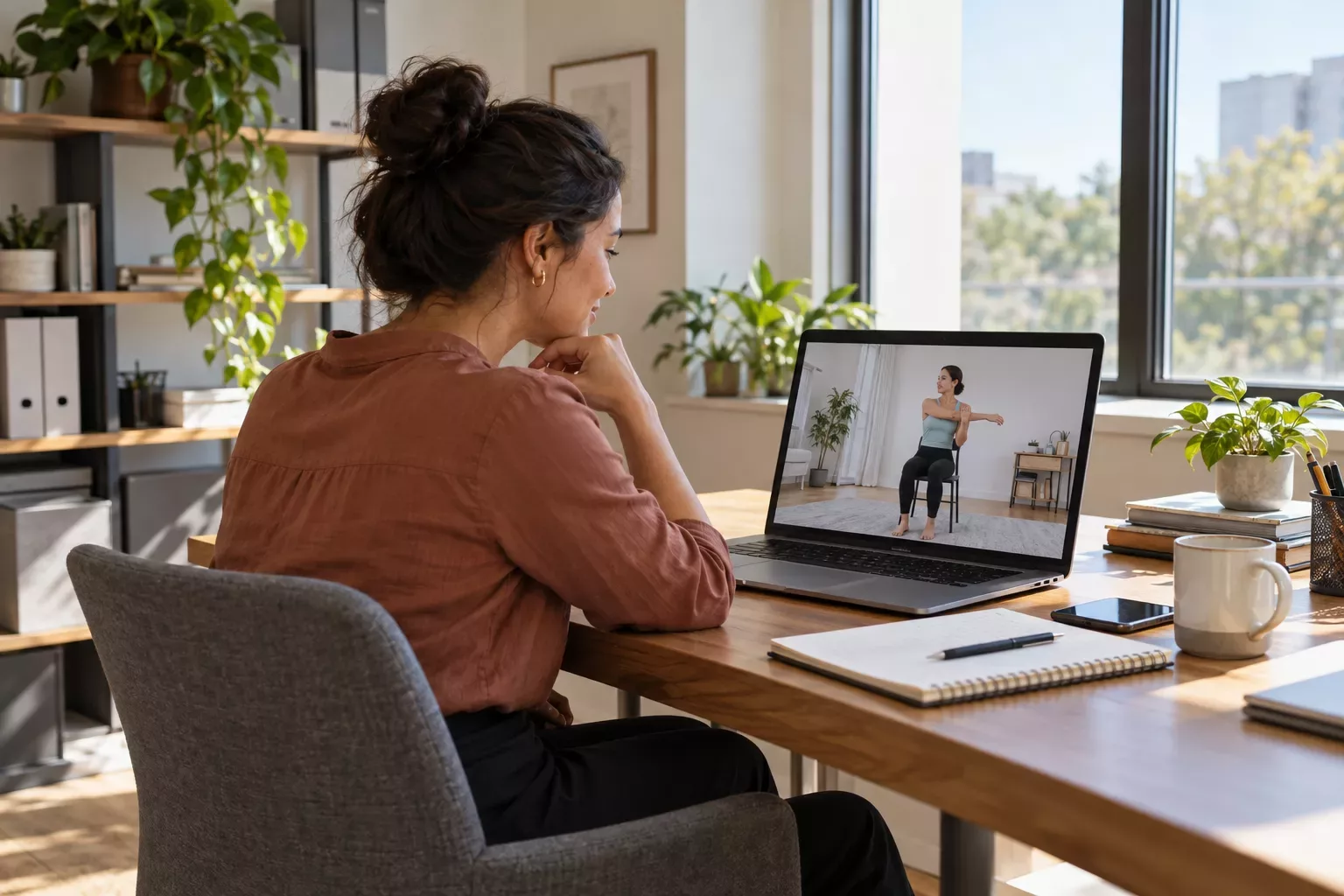
Check device charging and connectivity ahead of time. If the room has poor reception, a saved link may not be enough. Use an authorized offline resource where available, or a familiar written reminder if appropriate. Test sound privately so you do not use the first part of lunch troubleshooting a speaker while others try to eat or work.
Finish with a room reset
Return furniture to its agreed position, remove your belongings, and leave access clear. Include this cleanup in the schedule. A session that ends with a mat abandoned in a shared room is not logistically complete. If you use borrowed equipment, follow the relevant storage and cleaning expectations.
When you return to the workstation, re-establish the normal computer setup. A chair adjusted for a short lesson may need a different height or distance for typing. Put the practice resource away so autoplay does not restart during work. The physical ending helps distinguish the lunch activity from the next work block.
Use a fallback that preserves the meal and the break
When a room becomes unavailable, avoid spending the entire lunch searching for another. Decide beforehand what a simpler alternative would be: eating without a class, an ordinary walk if appropriate, a quiet pause, or rescheduling practice. A fallback is useful when it is available under the same constraints that disrupted the main plan.
Review the plan after several attempts. Note whether the room was available, the class fitted the real window, and the return felt manageable. If you repeatedly shorten the meal or rush cleanup, change the plan. Keep lunch's food, space, and return needs visible when deciding what to try next, even if the same class works comfortably at home.
Continue learning
- Chair Yoga at Work: A Beginner's Guide to Getting Started
- Desk Yoga in Work Clothes: How to Keep the Break Practical
- Desk Yoga Breaks at Work: Frequency, Reminders, and Meeting Gaps
Questions and answers
Can I fit a class into any lunch break?
Not necessarily. Count food, travel, setup, changing, cleanup, and return before selecting the class. Some windows will fit a brief suitable activity; others may be better used for eating and an ordinary pause. The class length alone does not describe the total time required.
Do I have to practice before eating?
There is no universal lunch order supplied here. Consider comfort, the actual activity, and any individual health or medication guidance. Do not skip needed food to satisfy a generic yoga rule. If lunch practice repeatedly creates problems, choose another format or time.
Is an empty meeting room a good place?
Only if its use is permitted and the setup fits the activity. Check booking rules, access, furniture, surfaces, privacy, and cleanup expectations. An empty room can still be reserved or unsuitable for the movements in your selected lesson.
What if I cannot change clothes?
Select a session that genuinely fits the clothing and footwear you have, or choose another break activity. Preview movements and transitions rather than trusting an office-yoga label. Do not force a class around restrictive seams, unstable shoes, or a uniform that limits movement.
Should I replace lunch with a longer session?
Build a plan that respects food and the other needs the break serves. A longer class is not automatically more useful if it makes the return rushed or removes time you need to eat. Consider a different practice window for a more involved lesson.
What is the most useful note to keep afterward?
Record the main logistical fact: room unavailable, travel longer than expected, class too long, or return setup manageable. A short observation is enough. Use it to change the next plan rather than scoring the day by whether you completed every movement.