
Choose a short beginner yoga lesson if you want to move and learn a few physical cues. Choose a short meditation if you want to practice directing your attention while staying in a comfortable position. If both sound appealing, try them on different days under similar conditions. You can make a better decision after seeing which instructions you can follow and which activity fits the time and space you actually have.
The comparison here is between a beginner yoga class built around movement and a simple guided meditation. Yoga also includes traditions with seated meditation and breath practices. Class descriptions can use the same words for different activities, so preview what you will actually be asked to do.
What will you do during your first session?
| Question | Beginner movement yoga | Guided meditation |
|---|---|---|
| What will I practice? | Following movement cues and choosing a comfortable option | Returning attention to a chosen cue |
| What will I need? | Room for the movements shown and a clear way to hear the teacher | A place to sit or rest and instructions you can hear |
| What can I change? | The lesson, the pace or which movements you follow | The cue, the position or the length of the session |
| How can I tell if it fits? | You can follow enough of the cues to move without rushing | You understand where to return your attention when it wanders |
A class described as mindful movement may ask you to notice your feet or breath while you change positions. A guided meditation can use sounds in the room, contact with the chair or another simple cue. You can learn what each format asks of you by listening to its opening minute. If the teacher spends that minute explaining what to do when you get lost, you already have something useful to try.
Choose based on the kind of practice you want
Try yoga if you want to move
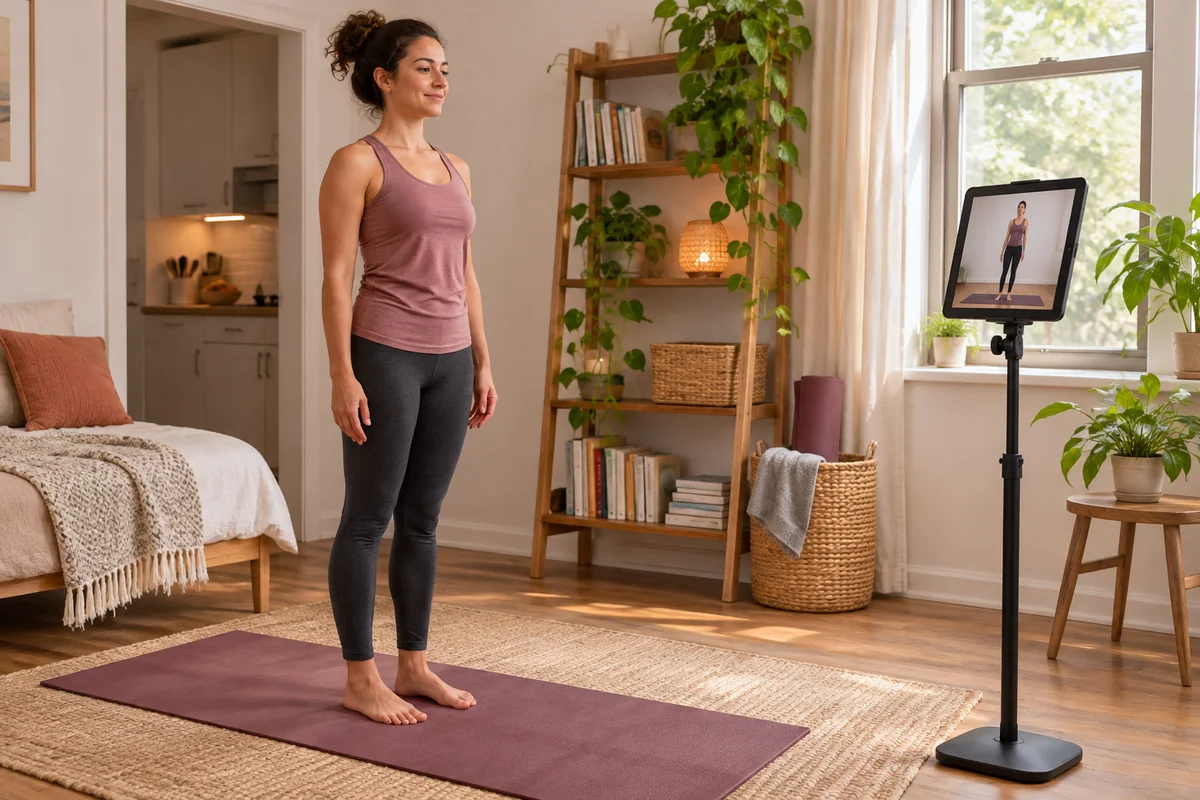
Look for a lesson that describes the starting position and shows how to get out of it. Preview a transition in the middle of the lesson, since this is often where a beginner needs a clearer explanation. If the teacher moves on before you understand the cue, pause or choose a different recording. A lesson with fewer transitions can be easier to follow than a shorter class with a faster pace.
Check the practice area before you press play. There should be room for the movements the teacher demonstrates, along with a clear place for the screen if you are using one. A short seated class may fit a small room. A standing or floor-based class may call for more space than the word “gentle” suggests. Look at the lesson itself to decide.
Try meditation if you want to work with attention
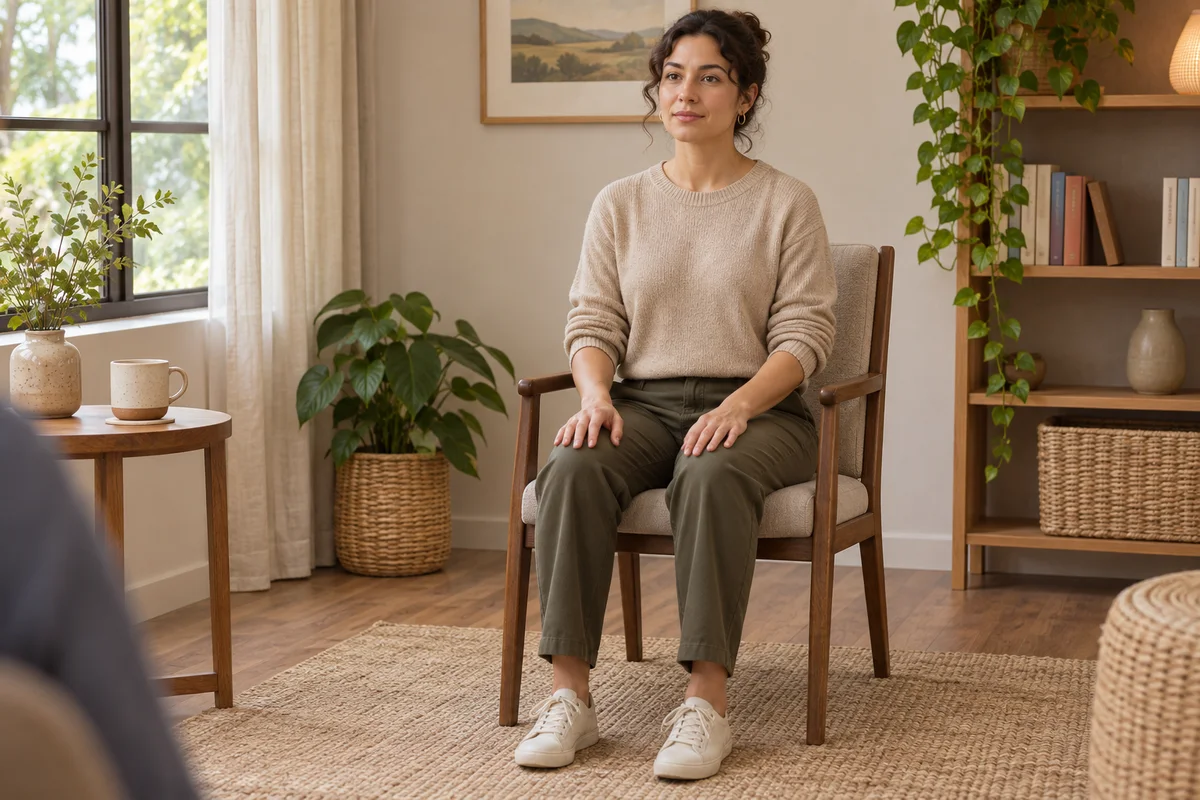
A short guided session can give you one thing to come back to, such as the sounds around you. When your attention shifts to a task or a conversation, notice the change and return to the cue. You might do that several times in a minute. Each return is part of the practice. You can sit in a chair, let your feet rest on the floor if that feels comfortable and keep your eyes open if you prefer.
Choose a guide that explains what to do when your mind wanders. If you have to guess what the teacher means by “clear your mind,” look for a session that gives you a concrete cue. You can also change the cue. For example, listening to the room may feel more approachable than paying attention to breathing.
Where breathing practice fits
A yoga instructor may use the breath as a cue for timing a movement. A meditation guide may invite you to notice breathing as it already happens. A class labeled pranayama may ask you to intentionally change an aspect of breathing. Those instructions feel different in practice even when the listings all mention breath.
Read the class description and choose instructions you understand. If a practice feels uncomfortable or a breathing pattern makes you feel lightheaded, stop the exercise and return to breathing normally. A movement lesson with simple cues or a meditation centered on sound are options you can preview without choosing a separate breath practice.
Try the two activities on different days
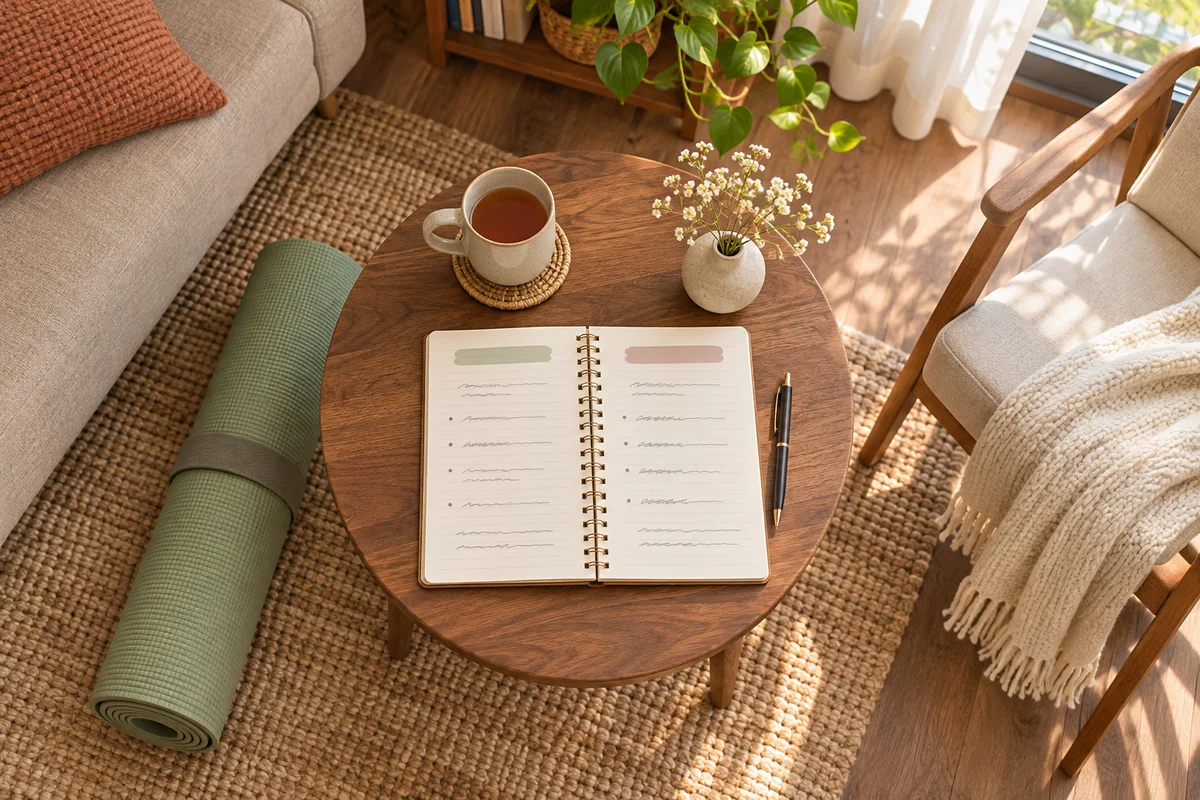
Set aside the same short window on two days when your schedule is similar. Choose a yoga lesson and a guided meditation before the first day. Use the first session to see how the teacher explains the activity. Use the second to see how a different kind of instruction fits your attention. You can stop early and still learn what made the session easier or harder to follow.
After each session, write down three things:
- Which instruction was easiest to understand?
- What got in the way of following the session?
- Would you choose this format again in the same setting?
For example, you might enjoy a movement class until the teacher begins cueing quickly while facing away from the screen. Your note could be “I wanted to move, but I lost the sequence when I had to watch the screen.” The next useful experiment would be a slower movement lesson with better verbal cues. If you could follow a meditation easily but kept stopping to check the time, try one with a clear start and finish before deciding whether the activity fits.
If you have only a few minutes
Look at how much of the time you can actually spend practicing. If clearing floor space would use most of it, try a seated meditation or a seated yoga lesson designed for that setting. If you already have a clear space and a lesson ready, a brief movement session is also realistic. Saving one suitable lesson ahead of time lets you spend the next break following it.
If your home is noisy
Try a cue that works with the room you have. A meditation that uses ordinary sounds may fit better than a recording that assumes silence. For yoga, look for instructions you can hear clearly without putting the device where you could step on it. If interruptions are frequent, a recording lets you pause and decide whether to continue after the interruption passes.
Combine them if both fit
You can finish a short movement lesson, sit comfortably and spend a minute noticing sounds. You can also begin by sitting briefly and then start the lesson. Pick an order that makes it easier to begin. If you are learning each activity for the first time, trying them on separate days can help you notice which part you want to repeat.
Keep the transition simple. If the movement class ends on the floor and you would rather meditate in a chair, give yourself time to change positions. If the instructor already guides a quiet finish that meets your needs, use that ending as your first experiment. A combined session can be as simple as following one recording from start to finish.
Use one concrete goal for the next week
Before choosing a format for the week, finish the sentence “I want a session that helps me practice…” If your answer is “following a few movement cues,” choose one short beginner yoga lesson and repeat it. If your answer is “coming back to one point of attention,” save one guided meditation and try it at a time you can keep free. Repeating a lesson lets you change the setting without having to learn a new teacher's instructions at the same time.
After two attempts, look at what you actually did. If you kept putting off both sessions because you did not know where to start, choose a single guide and open it before the planned time. If you could begin easily but got lost partway through, look at the instructions. For a movement class, listen for the setup and the exit. For a meditation, listen for a simple reminder about where to return your attention.
Make your next choice from your notes
Imagine you tried a movement class after work on Tuesday and a guided meditation on Thursday. You understood the meditation, but you missed having something physical to do. You enjoyed moving on Tuesday, yet spent the first half of the lesson trying to see the screen from the mat. Your notes suggest trying a slower yoga lesson with more verbal instruction. They also give you a reason to keep the short meditation as an option for a day when the floor is occupied.
You can use the same comparison if you prefer meditation. If you found it easier to follow and made time for it twice, repeat the session before adding a second activity. If you want to try yoga later, choose a specific class and put it on a day when you can hear the teacher and have room to move. See how to choose a beginner yoga video for a way to preview the instructions.
Questions and answers
Is yoga a form of meditation?
Some yoga practices include meditation, and some movement classes ask you to pay sustained attention as you move. The activities you will do depend on the class. Read the description or preview the opening so you know whether the focus is movement, meditation or a combination.
Do I have to meditate to do yoga properly?
For a beginner movement class, follow the cues and use options that fit your session. If the teacher ends with a quiet period, you can decide whether you want to try it. You can also explore a guided meditation separately to see whether you enjoy that kind of practice.
What if sitting still is hard for me?
Try a shorter session, change positions or choose a guide that allows movement. If your goal is to practice paying attention while moving, a slow class with clear cues can give you a specific task to focus on. Start with a format you can follow long enough to see how it works for you.
Is pranayama the same as meditation?
A pranayama lesson may teach a deliberate way of breathing. A meditation lesson may use the breath as one possible focus. Read the instructions to see whether you will be asked to change your breathing, observe it or focus on something else.
Is it better to meditate before or after yoga?
Try the order that fits your session. A short pause before class can help you notice what is going on around you. A quiet minute afterward may fit naturally if you already have a comfortable place to rest. If you are comparing the activities, try them separately first so you can evaluate each one.