
Start with beginner yoga if you want to explore postures, breathing cues and how to move between positions. Start with beginner mat Pilates if you want to learn a small set of controlled exercises and repeat them with attention to how you move. If you are open to both, preview one introductory class of each kind. The pace and teaching style of the actual lessons will tell you more about your first session than the labels alone.
This comparison is for someone choosing a first class at home. It compares a beginner movement yoga lesson with a beginner mat Pilates lesson. Reformer Pilates uses a machine and involves a different setup, so leave it out of your comparison unless you plan to learn on that equipment.
What will happen in each class?
| What to compare | Beginner yoga | Beginner mat Pilates |
|---|---|---|
| What the teacher might ask you to do | Enter a posture, stay for a moment or transition to the next position | Set up an exercise, repeat the movement and reset between sets |
| How breathing may be taught | Notice the breath in a posture or use it to time a transition | Coordinate breathing with phases of a controlled exercise |
| What to preview | How often the class changes positions and whether it offers simpler options | Starting positions, repetition pace and whether the teacher shows how to rest or reduce the effort |
| What to set out | A clear area, a mat if the lesson uses one and any specified supports | A clear area, a mat if the lesson uses one and any specified props |
| What can make the session hard to follow | Unfamiliar pose names or quick changes between standing and the floor | Instructions that combine breathing, body position and repetitions before you understand the setup |
There is overlap. A yoga class may repeat movements, and a Pilates instructor may ask you to pause and notice how you are breathing. Use the table to decide what to look for in the preview. If the lesson you find does something different, give the actual instructions more weight than the category.
How to preview a beginner yoga lesson
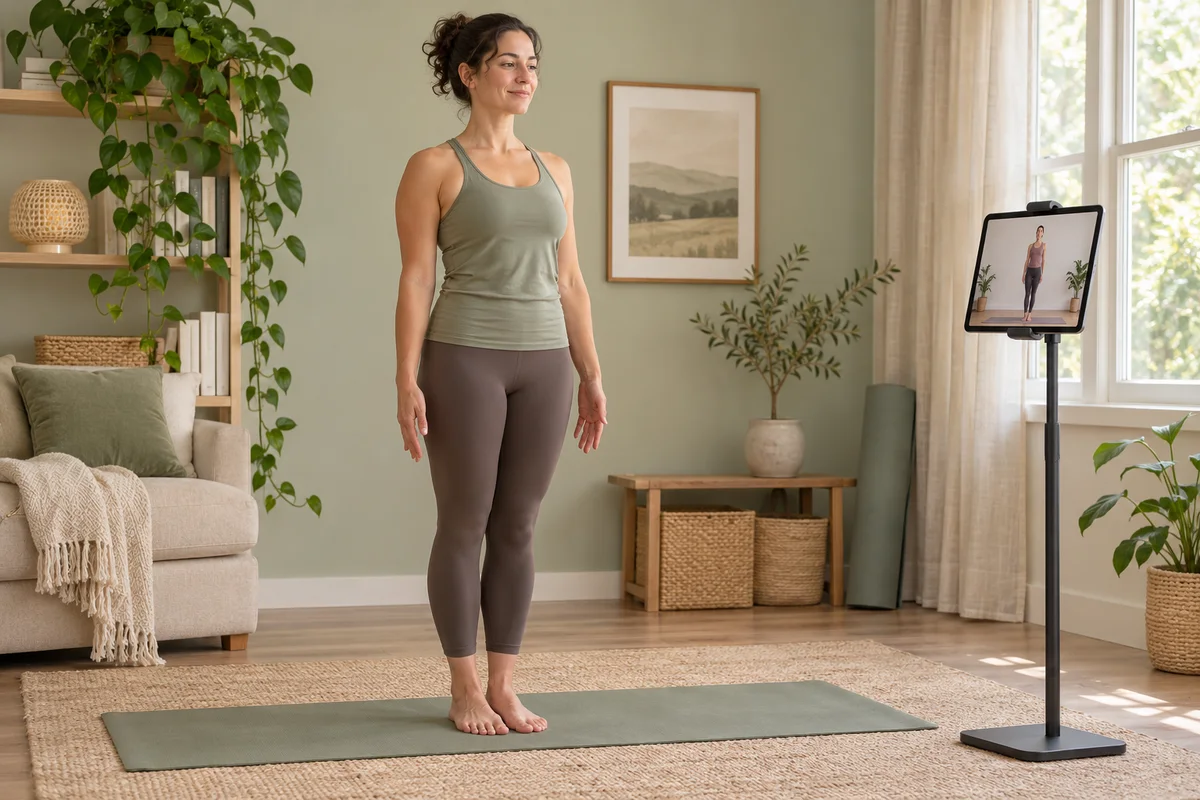
Watch the opening and a transition in the middle. In the opening, see whether the teacher tells you where to stand or sit, what to do with your hands and where you can pause. In the middle, check how the class changes positions. A lesson with a calm opening may still move quickly once everyone is standing.
Listen to a few cues without looking directly at the screen. If you can tell when to start, where to move and when to come back, the instructor's words may be clear enough to follow from your mat. If you hear only pose names you do not recognize, save that lesson for another day or choose one that explains the movements. You can use the beginner yoga video checklist to check a recording before committing to it.
Check the route between positions
Notice whether the teacher stays standing, uses a chair or moves from the floor to standing. A beginner lesson may still include transitions you prefer to avoid. Choose a class built around positions you can get into and leave at your own pace. If the room is small, make sure the mat and screen can stay in the same place while you move. You can also preview a chair-based class if that setup gives you more room.
Pay attention to the ending
Some classes finish with a quiet rest. Others end after the last movement or include an introduction to breathing or meditation. If you are comparing formats during a short practice window, count the ending as part of the session. It helps to know whether the last few minutes ask you to stay on the mat, get up or prepare for a separate activity.
How to preview a beginner mat Pilates lesson
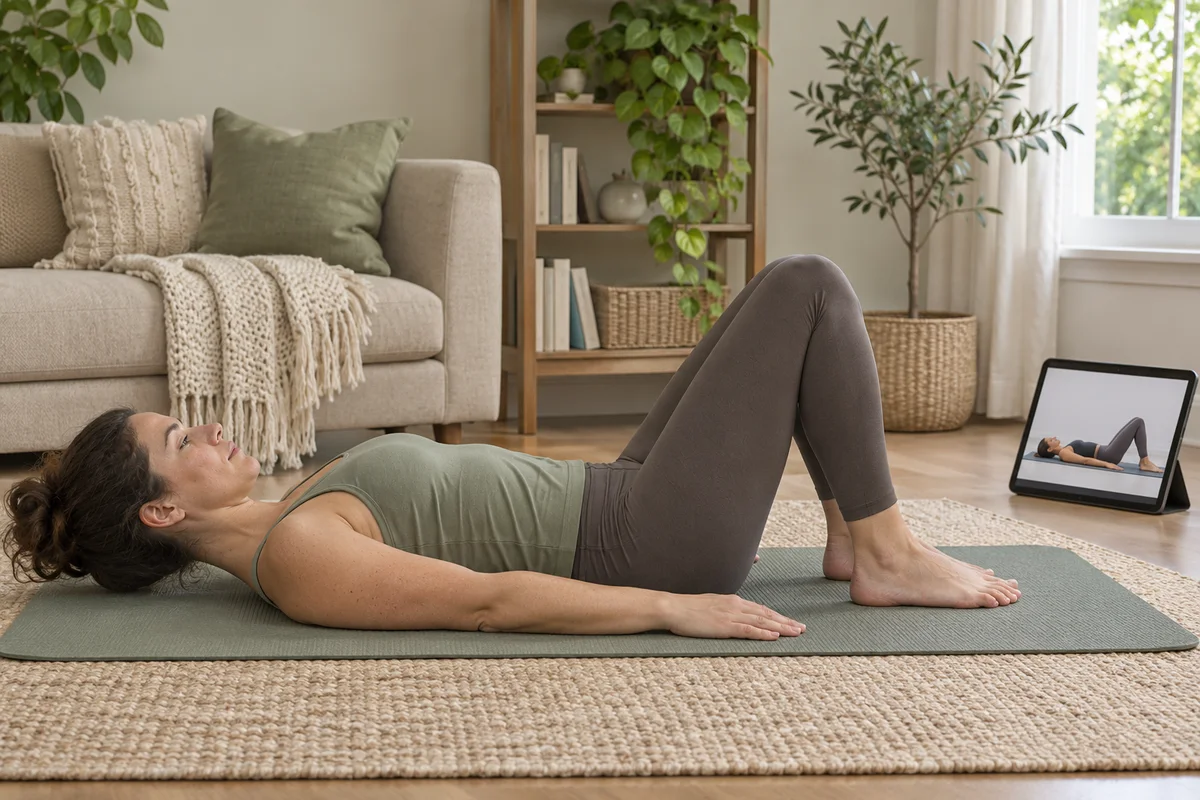
Watch how the instructor sets up the first exercise while you can see the screen comfortably. Look for a clear starting position, a demonstration of one complete repetition and a cue for when the repetition ends. If you need to see it again after lying down, pause and reposition yourself before looking. A beginner class that lets you watch first can be easier to follow than a short class that starts counting immediately.
When the class introduces a new exercise, check whether the instructor demonstrates it before starting the set. Find out what to do if you need a break before the group finishes. A recording lets you pause between exercises, so you can readjust your position or watch the demonstration again. If you prefer live feedback, ask when questions are welcome and whether the teacher can see you.
Confirm what “mat” means for this class
Mat Pilates does not require a reformer, but a recording may use a band, a ball or another prop. Check the class description before you start. If a prop is essential and you do not have it, choose a different lesson. An instructor may also show an option without equipment. Watch how that option starts and ends before deciding whether to follow it.
Check how much time you will spend on the floor
Some first lessons stay on the mat for most of the class and change between lying, sitting and kneeling. If getting down to the floor is the part you want to avoid, look for a lesson that specifically describes its starting positions and alternatives. The words “beginner” and “low impact” do not tell you how often a class changes position.
Try each format under similar conditions
Pick two short introductory lessons you can do on different days. Allow enough time to set up the space and preview the first movement before each lesson. Keep the comparison fair by choosing similar session lengths and avoiding a rushed time on one day and a quiet time on the other. If you find that one lesson needs equipment or more space, record that. Setup is part of whether a class fits your week.
After each lesson, answer four questions in a sentence or two:
- Which cue helped me start the first movement?
- Where did I have to pause or look back at the screen?
- Did the lesson show an option I could use if a movement was unfamiliar?
- Could I repeat this class in the same room and at a similar time next week?
For example, you might like the slower repetition in Pilates but spend most of the lesson repositioning the screen to see the instructor from the floor. Your next experiment could be a mat lesson with clearer spoken cues. Or you might enjoy the first few yoga postures and lose track when the class starts moving quickly. Try a class that spends more time explaining each transition before deciding which format you prefer.
Use your notes to choose the next class
If one format was easy to start and the instructions made sense, repeat that lesson once before looking for a longer one. Familiar instructions help you see whether the schedule and setup are manageable when you know what to expect. If both felt equally approachable, choose the one that fits your next available practice time.
If neither worked, change the teaching format before changing everything else. Try a different instructor or an introductory live class with time for questions. Write down the cue or transition you found confusing. A concrete question about where to put your feet or how to finish a repetition is easier for a teacher to address than a general request for an easier class. Stop any movement that causes sharp pain or dizziness. If you have exercise restrictions or are unsure which movements are appropriate, ask your healthcare professional and tell the instructor before class.
Questions and answers
Is yoga or Pilates easier for a complete beginner?
Difficulty depends on the lesson and how it is taught. A slow yoga class with few transitions may feel manageable, while a beginner Pilates lesson with clear demonstrations may be easier to follow if you like repetition. Preview both and choose the one where you can understand the setup and the return.
Can I try both at home without buying equipment?
Many beginner recordings use a mat and a clear space. Some add supports or small props. Read the lesson description and pick an introductory class that uses what you already have. Reformer classes require different equipment.
Does every yoga lesson include meditation?
The ending depends on the teacher. Some classes include a quiet rest or brief meditation, and others focus on movement. Preview the last few minutes if you want to know how the class will finish.
Can I do yoga and Pilates in the same week?
You can try one introductory lesson on each of two different days if that fits your schedule and the movements are appropriate for you. Give yourself time to review what happened after each session. If you are choosing one class to repeat, compare how easily you followed the instructions and how practical it was to set up.
Do I need to know the exercise names first?
Choose instruction that explains the starting position and demonstrates what to do. Names are useful for finding a movement again or asking a question, but you can learn them as you practice. If a teacher relies on terms you do not understand, choose a slower lesson that explains the cues in plain language.