
Yoga and stretching can overlap, but they are not identical activities. A yoga class may combine physical positions, attention, breathing instruction, and other elements. A stretching session may focus more narrowly on selected movements and ranges.
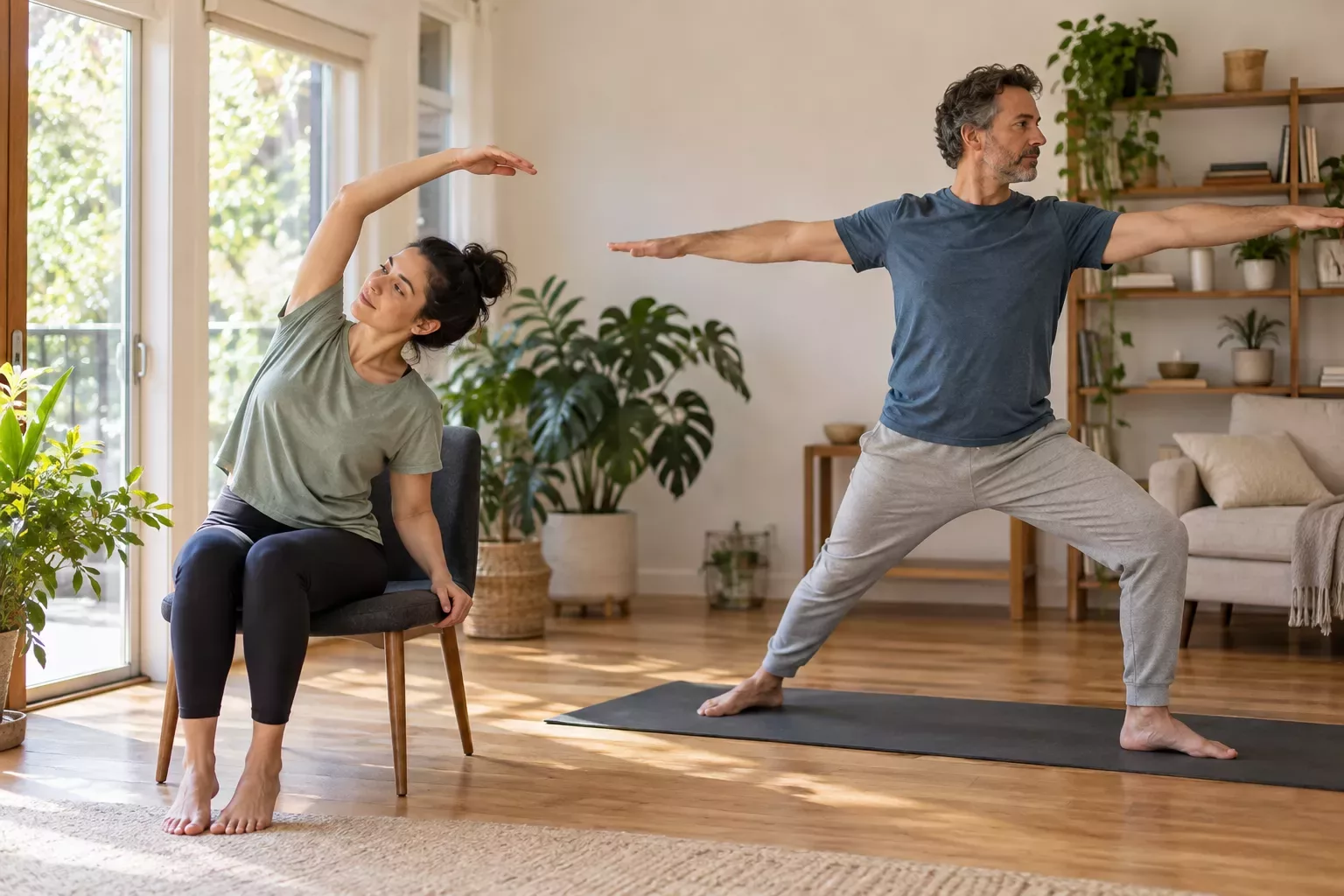
For a beginner, the best choice depends on what you want to learn, how you prefer to follow instruction, and which actual session fits your needs. Neither label automatically makes an activity better.
Compare the session, not just the name
A short yoga class might involve little continuous movement. Another might include substantial physical effort. Stretching routines also vary in pace, position, and demand. Compare a particular lesson with another particular lesson rather than ranking two broad labels.
| Feature | A beginner yoga lesson may include | A stretching lesson may include |
|---|---|---|
| Lesson purpose | An introduction to positions, class conventions, and attention | Selected movements or ranges explained for a defined task |
| Movement pattern | Separate positions or linked transitions | Separate stretches or a moving sequence |
| Breathing instruction | Specific cues, depending on the class | Ordinary breathing guidance or other cues |
| Setting | Chair, standing, floor, or a combination | Chair, standing, floor, or a combination |
| Main choice to verify | Do you understand its movements and transitions? | Do you understand its movements and transitions? |
None of these features is exclusive to either label. Preview whether you will remain seated, move to the floor, hold positions, or follow a breathing pattern. Those details tell you more than assuming yoga is always gentle or stretching is always simple.
Choose according to the immediate task
| If you want to… | Consider looking for… |
|---|---|
| Learn yoga vocabulary and class structure | A complete-beginner yoga lesson |
| Explore one familiar movement area | A clearly explained stretching lesson |
| Take a short work break | A suitable seated or standing movement option |
| Learn without rushing | Detailed instruction, regardless of the label |
Neither activity should be used to self-diagnose a problem. Persistent pain or individual medical restrictions call for appropriate advice.
Understand what a short session leaves out
A few stretches do not automatically provide a complete activity program. The same is true of a brief, low-intensity yoga session. Your week may still need other forms of movement according to your abilities and goals.
CDC describes different activity types and the contributions they can make to an adult activity plan. What counts as physical activity
You can use both without making the plan complicated
You might follow a suitable yoga lesson at home and use a short movement break during work. There is no requirement to call every stretch yoga or to turn every break into a full class.
Keep the instructions clear and the purpose modest. A work break may be about leaving the keyboard and changing activity; a home lesson may be about learning unfamiliar positions.
Judge the format by your experience
After trying an appropriate session, ask whether you understood the instructions, could choose an easier version, and would want to repeat it. If the answer is no, identify why before rejecting the entire activity.
Perhaps the class was too fast, the room was wrong, or the teacher's style did not suit you. Change the practical mismatch rather than deciding that you need a more impressive routine.
Choose a format that helps you participate thoughtfully. You do not need to settle the yoga-versus-stretching debate before making a useful start at home.
Compare the learning experience you want
Before comparing labels, describe the task you hope to accomplish. Do you want to learn how a yoga class is organized, follow a few clearly explained stretches, or take a break from computer work? Each task can lead to a different session choice. A good match answers the immediate question without requiring you to settle which activity is superior in general.
Yoga is a broader practice than a collection of stretches, and contemporary classes vary substantially. A stretching lesson can also be thoughtfully taught and require careful attention. Avoid assuming that one format is automatically deeper, easier, more physical, or more useful. Inspect what the instructor actually asks you to do and how the lesson supports learning.
Compare four concrete features
Look at positions, transitions, attention, and pace. Positions tell you whether the session uses a chair, standing work, or the floor. Transitions tell you how you move between them. Attention describes whether you are following explanations about movement, breath, or other elements. Pace tells you how much time you have to understand each step.
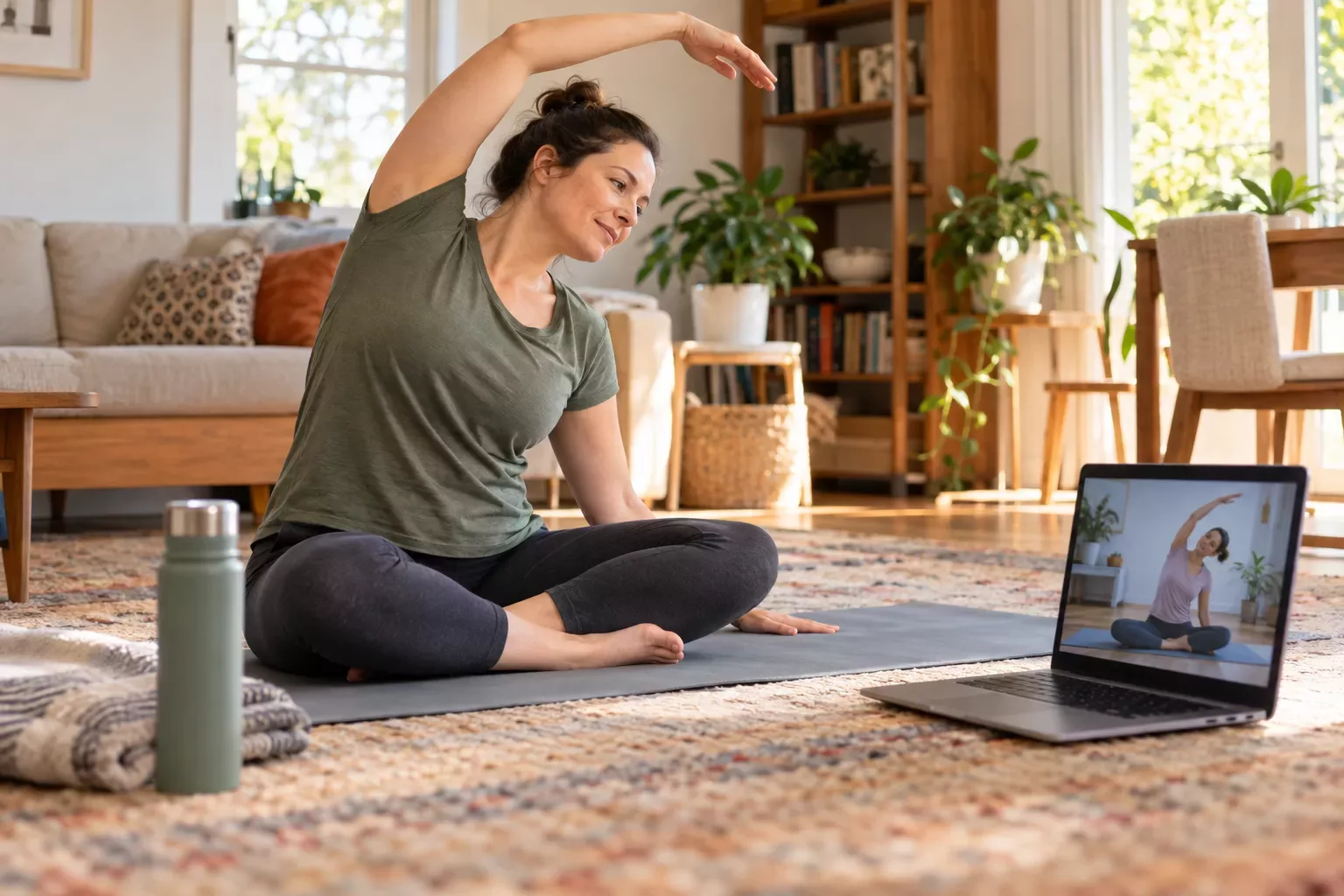
These features make an immediate difference at home. A short stretching video with rapid demonstrations may be harder to follow than a longer introductory yoga lesson. A flowing yoga class may require more continuous coordination than a seated stretching sequence. The names alone do not tell you which teaching task will be simpler for you.
Separate activity preference from medical expectations
If your main question is which activity will fix a symptom, a general comparison cannot answer it. Neither yoga nor stretching should be selected as self-prescribed treatment for an unexplained problem. Get appropriate advice about symptoms or restrictions, then choose a session that fits that guidance and your learning preferences.
For a general home practice, you can use modest goals: understand a few unfamiliar cues, follow a manageable lesson, or spend an authorized break away from the keyboard. Those goals do not require promises about correcting posture, removing pain, or transforming flexibility in a set number of days.
Avoid treating intensity as proof of usefulness
A deep stretch is not automatically a better stretch, and a physically demanding yoga flow is not automatically a better class. The relevant question is whether the session's demands serve your purpose and fit your current situation. More difficult positions can also require more instruction, concentration, and setup time.
Likewise, a session that feels calm may still include movements unsuitable for you. Music, slow speech, and a quiet background do not establish suitability. Keep the practical checks active regardless of how relaxing the presentation appears on screen.
| Comparison question | A yoga lesson may offer | A stretching lesson may offer |
|---|---|---|
| What am I learning? | Positions within a broader class framework | Selected movements or ranges |
| How is the session organized? | A sequence with transitions and attention cues | A series of individual stretches or a sequence |
| Does the title reveal the demands? | Only partly; preview is needed | Only partly; preview is needed |
| Can it fit a short home window? | Sometimes, depending on setup and pace | Sometimes, depending on setup and pace |
| Does it replace a complete activity plan? | Not automatically | Not automatically |
Try a fair comparison if both formats interest you
Choose two suitable introductory lessons with similar practical requirements. For example, compare sessions that both remain seated or both stay standing, rather than contrasting a demanding floor flow with a quiet chair stretch. Keep duration and available concentration reasonably similar where possible. The aim is to learn which experience you prefer, not to stage a contest.
After each lesson, use the same questions. Did I understand the starting position? Could I follow without constant screen checking? Were the transitions manageable? Did the explanation interest me? Would I repeat this format? Record what happened in your own session without generalizing that every yoga or stretching class will be the same.
Change the teacher before rejecting the category
If the session was confusing, identify whether the problem concerned the activity or its presentation. Perhaps the teacher used unexplained terminology, demonstrated too quickly, or assumed you could get to the floor easily. Another introductory lesson in the same category could address that mismatch.
You also do not have to continue comparing indefinitely. If one appropriate format is understandable and appealing, you can use it while remaining open to another later. Choosing a practical session does not require a final opinion about every possible form of yoga and stretching.
Fit either choice into a broader week
A short movement lesson is one part of your activities. It may not supply all the aerobic, strengthening, balance, or other movement opportunities relevant to your situation. The demands of yoga vary, and stretching does not become a complete program simply because you perform it consistently.
When planning, describe what you actually do rather than counting every session under a broad label. Ten minutes of slow seated instruction and ten minutes of continuous vigorous movement are different experiences. You can enjoy both without assuming they make identical contributions to your overall activity plan.
Use different formats for different occasions
At home, you might prefer an introductory yoga lesson when you have time to concentrate. During a work break, you might select a few familiar, appropriate movements with clear instructions. These choices need not compete. The available room, clothing, chair, and interruption risk can reasonably change which format fits that occasion.
Avoid turning every small movement into a full practice. A brief pause away from the screen can remain a brief pause. If you want to study more of yoga's vocabulary or framework, set aside an opportunity suited to instruction rather than trying to fit the entire learning task between work messages.
A hypothetical comparison with useful observations
Imagine Taylor previews two beginner sessions for home: a seated stretching lesson and a standing yoga introduction. Both appear appropriate, but Taylor wants to compare how the teaching feels. After trying them on separate suitable occasions, Taylor notes that the stretching lesson explains individual movements clearly while the yoga lesson spends more time introducing a sequence.
Taylor might choose one, alternate, or seek another teacher. This invented example does not show that one activity produces a superior outcome. It illustrates how observations about instruction can guide preference without making claims about treatment, calorie expenditure, or universal benefits.

Continue learning
- What Type of Yoga Should a Beginner Try at Home?
- How Often Should Beginners Do Yoga at Home?
- Chair Yoga at Work: A Beginner's Guide to Getting Started
Questions and answers
Is yoga just stretching with different names?
Yoga can include stretching movements, but classes may also involve positions, attention, breathing instruction, and other elements of a broader practice. Stretching lessons may focus more narrowly on specific movements. The amount of overlap varies, so compare the actual sessions rather than relying only on their labels.
Which is easier for a complete beginner?
Ease depends on the lesson's demands and clarity. A detailed introductory yoga class may be easier to follow than a fast stretching routine, or the reverse. Check starting positions, transitions, pace, and available options to find instruction you can understand without rushing.
Which should I choose if I am not flexible?
Choose suitable beginner instruction that explains manageable options and does not require you to copy the teacher's deepest range. Flexibility is not the only selection criterion. Consider the movements, pace, and any individual restrictions, and ask for guidance when you cannot identify an appropriate option.
Can I stretch during a work break and do yoga at home?
You can use different appropriate activities in different settings. Keep workplace breaks compatible with your chair, clothes, space, and responsibilities. Reserve unfamiliar instruction for an opportunity when you can concentrate, and do not assume a brief break replaces other activity throughout the day.
Which one is better for pain?
A general comparison cannot determine treatment for your symptoms. Seek advice appropriate to the problem, especially when pain is persistent, new, or worsening. Once you understand relevant restrictions, you can evaluate classes according to those needs instead of choosing from broad claims in a video title.
Do I need to choose one permanently?
No permanent decision is necessary. You can choose a format for the purpose and setting in front of you, then reassess later. Keep notes on what you understood and enjoyed so future choices reflect your experience rather than a debate about which category should always win.